How to Track Progress Without the Scale
2 October 2026
stepping on a scale can feel like the only way to measure whether your health efforts are working. The number goes down, you feel a small victory. It goes up, and the day can feel ruined. But that little digital reading is a surprisingly narrow and noisy signal. It moves for reasons that have nothing to do with fat loss: hydration, sodium, hormonal shifts, the timing of your last meal, how well you slept, and even the temperature of the room. If you have ever done everything "right" for a week and watched the scale jump two pounds, you already know the frustration.
The good news is that body weight is only one of many ways to measure progress. There are better, more stable, and more motivating signals available. This article walks through how to track progress without the scale, why those methods work, when to use them, and how to avoid the traps that make any tracking system backfire.
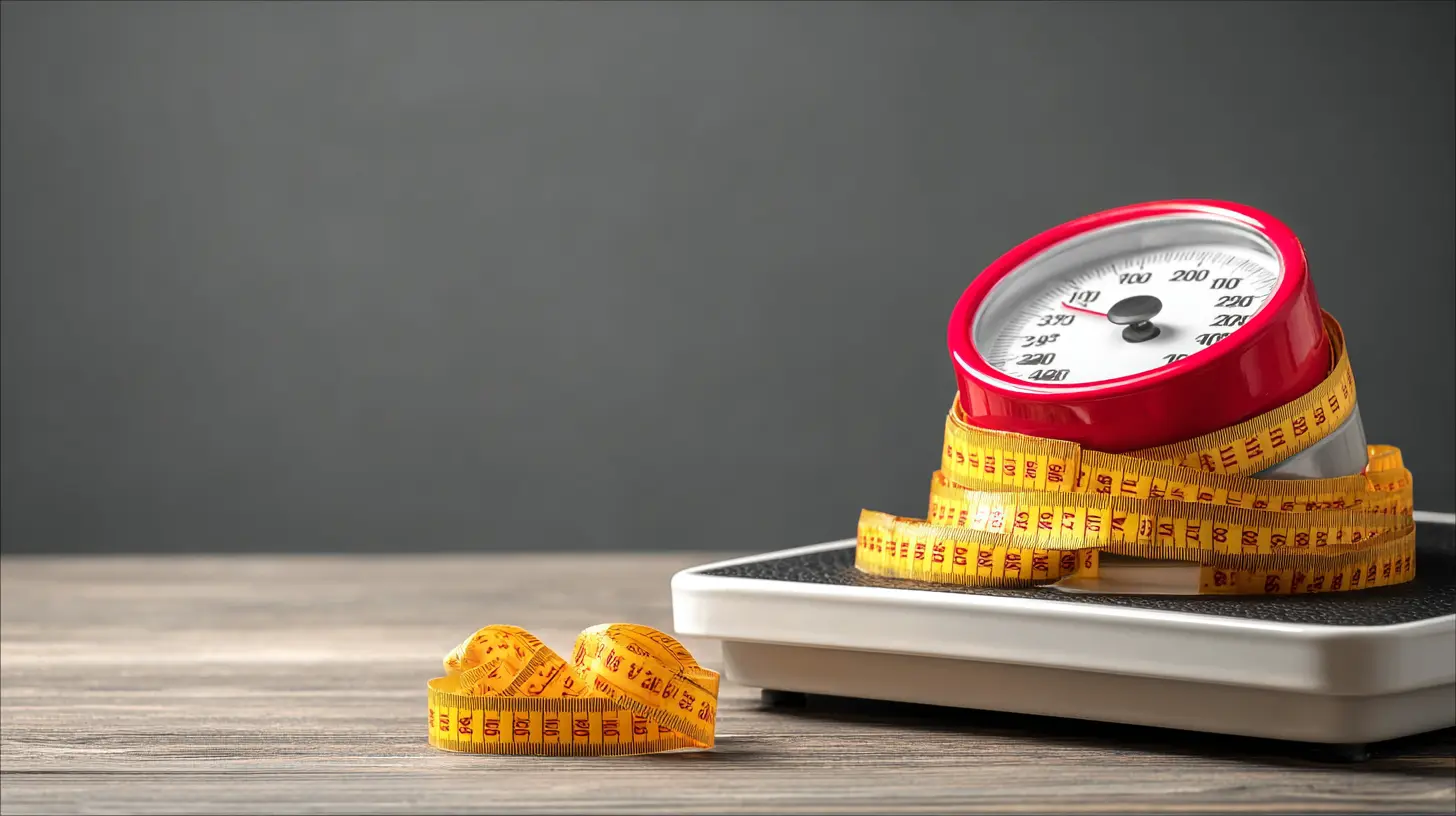
Why the Scale Is a Limited Tool
The scale measures total body mass. That includes fat, muscle, bone, organs, undigested food, water, and glycogen. A single measurement cannot tell you which of those changed. You could lose a pound of fat and gain two pounds of water and see the number rise. That does not mean your plan failed. It means the tool is not precise enough to answer the question you are actually asking.There is also a psychological cost. Research on weight tracking suggests that for some people, frequent weighing increases anxiety, obsessive thoughts, and disordered eating behaviors. For others, it provides useful accountability. The difference often comes down to how the number is interpreted. If the scale is your only feedback, every fluctuation feels like a verdict on your worth or your effort. That is a fragile foundation for a long-term health habit.
The alternative is not to abandon measurement. It is to broaden it. Progress can be tracked through performance, body composition, energy, health markers, and behavior. Used together, these signals give a far more accurate picture than any single number.
The Core Principle: Measure What You Actually Care About
Before choosing a tracking method, get clear on your real goal. Most people say they want to "lose weight," but what they usually mean is one of the following:- Reduce body fat while keeping or gaining muscle
- Improve energy and reduce fatigue
- Lower risk for metabolic disease
- Feel stronger and more capable
- Improve sleep, mood, or digestion
- Fit into clothes more comfortably
Each of these goals has a better tracking method than the scale. Fat loss is best tracked with waist measurements and progress photos. Strength is tracked with performance. Metabolic health is tracked with blood markers. Energy and mood are tracked with a simple daily log. When you measure the thing you actually care about, the feedback becomes meaningful and motivating.
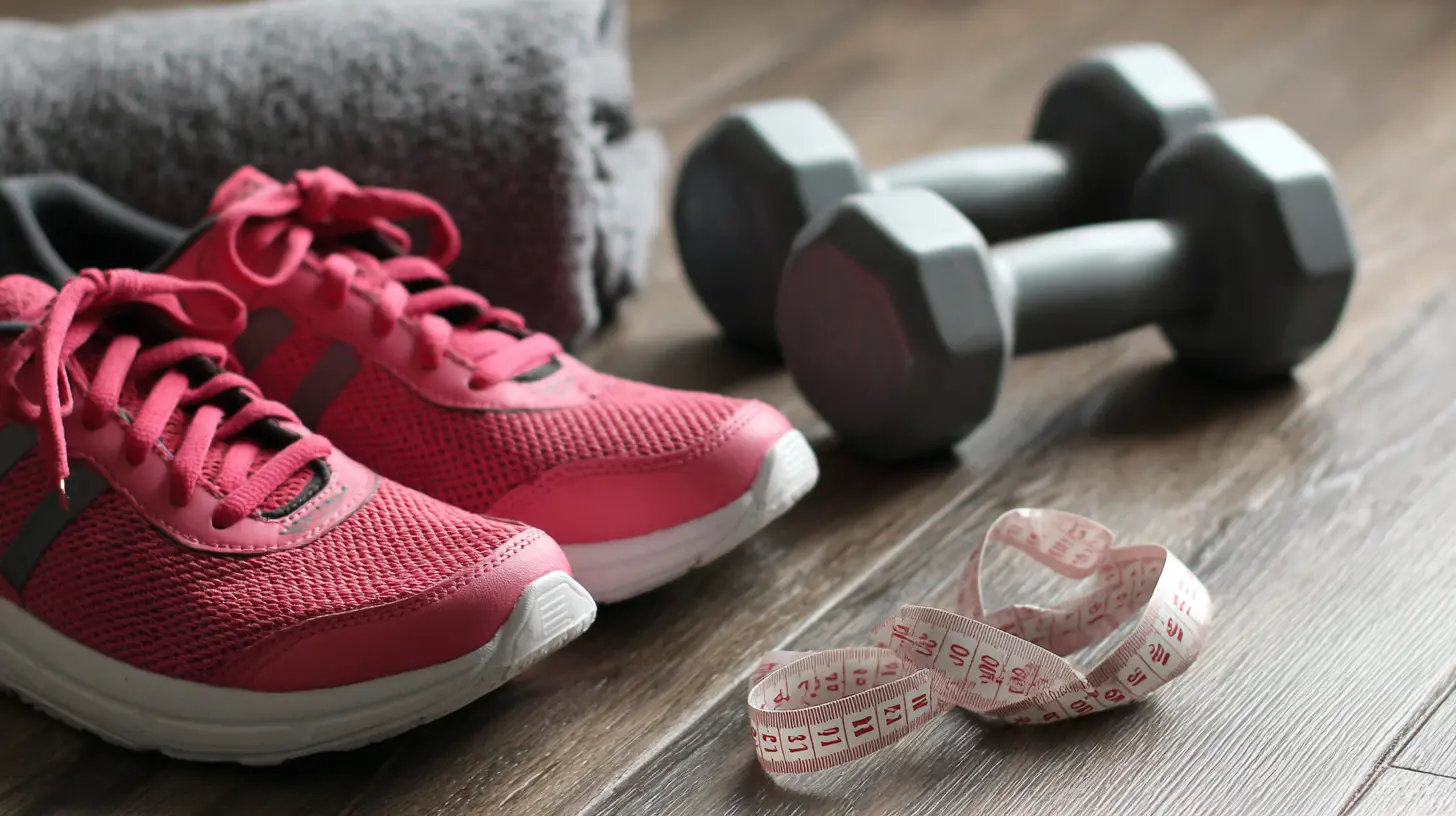
Body Measurements: Simple, Reliable, and Underrated
Measuring tape is one of the most practical tools available. It is cheap, repeatable, and far less volatile than body weight. Waist circumference in particular correlates well with visceral fat, the fat around your organs that carries the greatest health risk.How to Measure Consistently
Consistency matters more than precision. Use the same tape, the same time of day, and the same landmarks each time. A common approach:- Measure in the morning before eating, after using the bathroom
- Stand relaxed, breathe out normally, do not suck in your stomach
- Measure at the narrowest point of the waist, usually just above the navel
- Measure hips at the widest point
- Measure each thigh at the same distance from the knee
- Measure upper arms at the same point relative to the shoulder and elbow
Take each measurement twice and record the average. Write down the date. Repeat every two to four weeks. Weekly is fine if you are patient, but daily is unnecessary and introduces noise.
What to Expect
Changes in measurements often show up before changes in the scale, especially if you are gaining muscle and losing fat at the same time. A person doing resistance training might see their waist shrink by an inch or two while their weight stays flat. That is a genuine, meaningful improvement that the scale would completely miss.One caveat: measurements can be affected by bloating, menstrual cycle, and even how hydrated your skin is. Look at the trend over months, not the difference between two readings.

Progress Photos: The Honest Mirror
Photos are uncomfortable for many people, and that is exactly why they work. They capture changes that you cannot see in the mirror because you look at yourself every day. Gradual changes are invisible in real time but obvious when compared side by side.How to Take Useful Photos
The setup matters more than the camera. Use the same location, lighting, time of day, and clothing each time. Natural light from a window is best. Stand in the same pose: front, side, and back. Keep the phone at the same height. Take photos every four to eight weeks, not every week.Store them somewhere private. The goal is honest documentation, not public performance. Many people find it helpful to take photos but not look at them until several months have passed. The comparison is more striking and less discouraging that way.
When Photos Are Not Helpful
For people with a history of body image struggles, photos can become a source of rumination. If looking at photos makes you feel worse rather than more informed, skip them. There is no rule that says you must use every tracking method. Choose the ones that support your mental health.Performance Tracking: The Most Motivating Metric
How your body performs is one of the most reliable indicators of whether your training and nutrition are working. If you can do more push-ups, run farther, or lift heavier than you could a month ago, something is going in the right direction. Performance improvements often happen even when the scale does not move, particularly for beginners and for people in a slight calorie deficit.Examples of Performance Metrics
- Number of push-ups, pull-ups, or squats in a set- Weight lifted for a given number of reps
- Time to complete a fixed-distance run or row
- Resting heart rate
- Number of flights of stairs climbed without stopping
- How quickly you recover between sets
- Grip strength, often measured with a dynamometer
Keep a simple training log. Record the exercise, the weight or resistance, the reps, and how it felt. Over time, the log becomes a story of progress that no scale can tell.
Why This Works
Performance reflects neuromuscular adaptation, cardiovascular efficiency, and muscle mass. It is also inherently rewarding. Hitting a personal best is a concrete win. That positive feedback loop makes it easier to stay consistent, which is ultimately what drives long-term results.One trade-off: performance can dip during a calorie deficit or a period of high stress. A temporary drop does not mean you are losing ground. It may just mean your body is allocating resources differently. Look at performance over months, not days.
How Clothes Fit: The Everyday Gauge
You wear clothes every day, and they provide constant, low-effort feedback. A pair of jeans that used to be tight around the waist but now fits comfortably is a real, tangible sign of change. A shirt that fits differently across the shoulders can signal muscle gain.How to Use This Signal
Pick one or two reference garments. Try them on every few weeks. Notice where they are tight, where they are loose, and how they feel overall. Do not obsess over a single day's fit, since bloating and hydration affect how clothes feel. Look at the pattern over a month or two.This method is especially useful for people who do not want to track numbers at all. It requires no tools, no logs, and no calculations. It is also less precise, which is both a weakness and a strength. Less precision means less anxiety for some people.
Health Markers: The Medical Perspective
If your goal is metabolic health, blood work is far more informative than body weight. Markers such as fasting glucose, HbA1c, triglycerides, HDL cholesterol, blood pressure, and liver enzymes tell you how your body is actually functioning. Two people can weigh the same and have very different metabolic profiles.When to Get Testing
Routine blood work is typically done through a primary care provider. How often depends on your age, risk factors, and health history. If you have a family history of diabetes or heart disease, or if you have symptoms like fatigue or unusual thirst, testing is worth discussing with a doctor. Do not order random tests online without a plan for interpreting them. A number without context can cause unnecessary worry.What to Track
- Fasting glucose and HbA1c for blood sugar control- Lipid panel for cardiovascular risk
- Blood pressure, which you can track at home with a validated cuff
- Waist-to-height ratio, a simple and surprisingly strong predictor of metabolic risk
- Resting heart rate, which often improves with cardiovascular fitness
These markers can improve significantly even when weight changes little. That is a strong argument for measuring health rather than mass.
Energy, Sleep, and Mood: The Signals You Feel
How you feel is data. It is subjective, but that does not make it less real. Improvements in energy, sleep quality, mood, digestion, and mental clarity often show up before any change in body composition. Tracking them can keep you motivated during periods when the scale is stubborn.A Simple Daily Log
Keep it short. Rate each of the following on a scale of one to five:- Energy upon waking
- Sleep quality
- Mood
- Digestion
- Cravings or hunger
- Focus
Record the ratings in a notebook or app. After a few weeks, look for patterns. You might notice that your energy is higher on days you walk outside, or that your sleep is worse when you eat late. These insights are far more actionable than a weight reading.
Why Subjective Tracking Works
Subjective measures capture aspects of health that no device can. They also reinforce the connection between behavior and how you feel, which strengthens intrinsic motivation. When you can see that a walk improves your mood, you are more likely to keep walking.The downside is that self-reporting is vulnerable to bias. If you expect to feel better, you might rate yourself higher. That is why it helps to pair subjective tracking with at least one objective measure, like measurements or performance.
Progress Photos and Measurements Together: A Practical System
If you want a simple, scale-free system, try this:1. Take photos front, side, and back every eight weeks.
2. Measure waist, hips, and one limb every four weeks.
3. Log one performance metric, like push-ups or a timed run, every two weeks.
4. Rate energy and sleep daily in a one-line journal.
5. Check blood pressure monthly if you have a cuff.
6. Review everything every three months, not every week.
This approach gives you multiple independent signals. If one is flat, others may show progress. Over time, the pattern becomes clear.
Common Mistakes and Misconceptions
Mistake 1: Tracking Too Often
Daily measurements of anything are noisy. Waist measurements change with bloating. Performance fluctuates with sleep and stress. Photos look different with lighting. Track less often than you think you need to. Monthly or quarterly is often enough.Mistake 2: Using Only One Method
Any single metric can mislead. The scale is the most notorious, but measurements, photos, and performance can also plateau or fluctuate. Use at least two or three methods so you can cross-check.Mistake 3: Ignoring the Trend
One data point is not a trend. Three or four points over several months is a trend. Zoom out.Mistake 4: Letting Tracking Become the Goal
Tracking is a tool, not a destination. If the process starts to feel like a job or a source of dread, simplify it. The best tracking system is the one you will actually stick with.Misconception: You Must Track Something
You do not. Some people do best with no formal tracking at all, relying on habits, how clothes fit, and how they feel. That is a valid approach. Tracking is useful when it informs decisions. If it does not, it is just noise.When to Reconsider the Scale
There are situations where weighing yourself is genuinely useful. If you are under medical supervision, if you are an athlete in a weight-class sport, or if you have a specific clinical goal, the scale may be an appropriate tool. In those cases, use it as one input among many, and interpret it with the guidance of a professional.For most people pursuing general health and body composition goals, the scale is optional. It is not evil, but it is not necessary. If it helps you, keep it. If it hurts you, put it away.
Building a System That Lasts
The most effective tracking system is one that fits your life and your personality. Consider these questions:- Do you like data and numbers, or do they stress you out?
- Are you motivated by competition, or by how you feel?
- Do you have a history of disordered eating or body image struggles?
- How much time and attention can you realistically give to tracking?
Your answers should shape your approach. A data-driven person might love a training log and quarterly blood work. A person who dislikes numbers might prefer photos and how clothes fit. Both are valid.
Final Thoughts
The scale is one instrument in a large toolbox. It is not the only one, and for many people it is not the best one. Body measurements, progress photos, performance metrics, how clothes fit, health markers, and subjective well-being all provide meaningful information about whether your efforts are working. Used together, they give a richer, more accurate, and more motivating picture than any single number ever could.The goal is not to avoid measurement. It is to measure what matters. When you track the things you actually care about, progress becomes visible even when the scale stays silent. And that visibility is what keeps you going.
all images in this post were generated using AI tools
Category:
Fitness For BeginnersAuthor:

Madeline Howard