How Shopping Habits Impact Your Long-Term Health
11 October 2026
Most people treat shopping as a neutral errand. You need food, soap, and a new pair of shoes, so you go get them. What few stop to consider is that the way you shop, where you shop, how often you shop, and what influences your decisions in the aisle or on the screen add up to something far more consequential than a full pantry. They shape your diet, your exposure to chemicals, your sleep, your stress levels, your financial stability, and ultimately your risk of chronic disease.
This is not a moral argument about willpower. It is a practical look at the mechanics connecting everyday purchasing decisions to health outcomes measured over years and decades. Understanding those mechanics gives you leverage. Small, deliberate changes in how you buy things can compound into meaningful differences in how you feel and how long you stay well.

Why Shopping Is a Health Behavior, Not Just an Economic One
Public health researchers often categorize behaviors into direct risks (smoking, poor diet, inactivity) and upstream determinants (income, education, environment). Shopping sits at the intersection. It is the daily mechanism through which upstream factors become physical exposures.Consider what a single grocery trip determines. It decides which macronutrients and micronutrients enter your home, which ultra-processed foods are within arm's reach at 9 p.m., how much sodium and added sugar your family consumes, and whether your kitchen supports cooking or convenience eating. Multiply that by roughly two to three trips per month and 52 weeks per year, and you have the single largest recurring influence on your household's nutritional environment.
The same logic applies beyond food. Your choice of cleaning products, personal care items, furniture, mattresses, and even clothing determines your ongoing exposure to volatile organic compounds, phthalates, flame retardants, and other chemicals that research has linked to hormonal disruption and respiratory irritation. None of these exposures is dramatic on its own. The concern is cumulative and chronic.
Shopping also functions as a stress behavior. For some people it is a mood regulator, a source of dopamine, or a way to feel control when other parts of life feel chaotic. That psychological dimension is real and worth taking seriously, because it can quietly drive patterns that undermine health even when the person knows better.
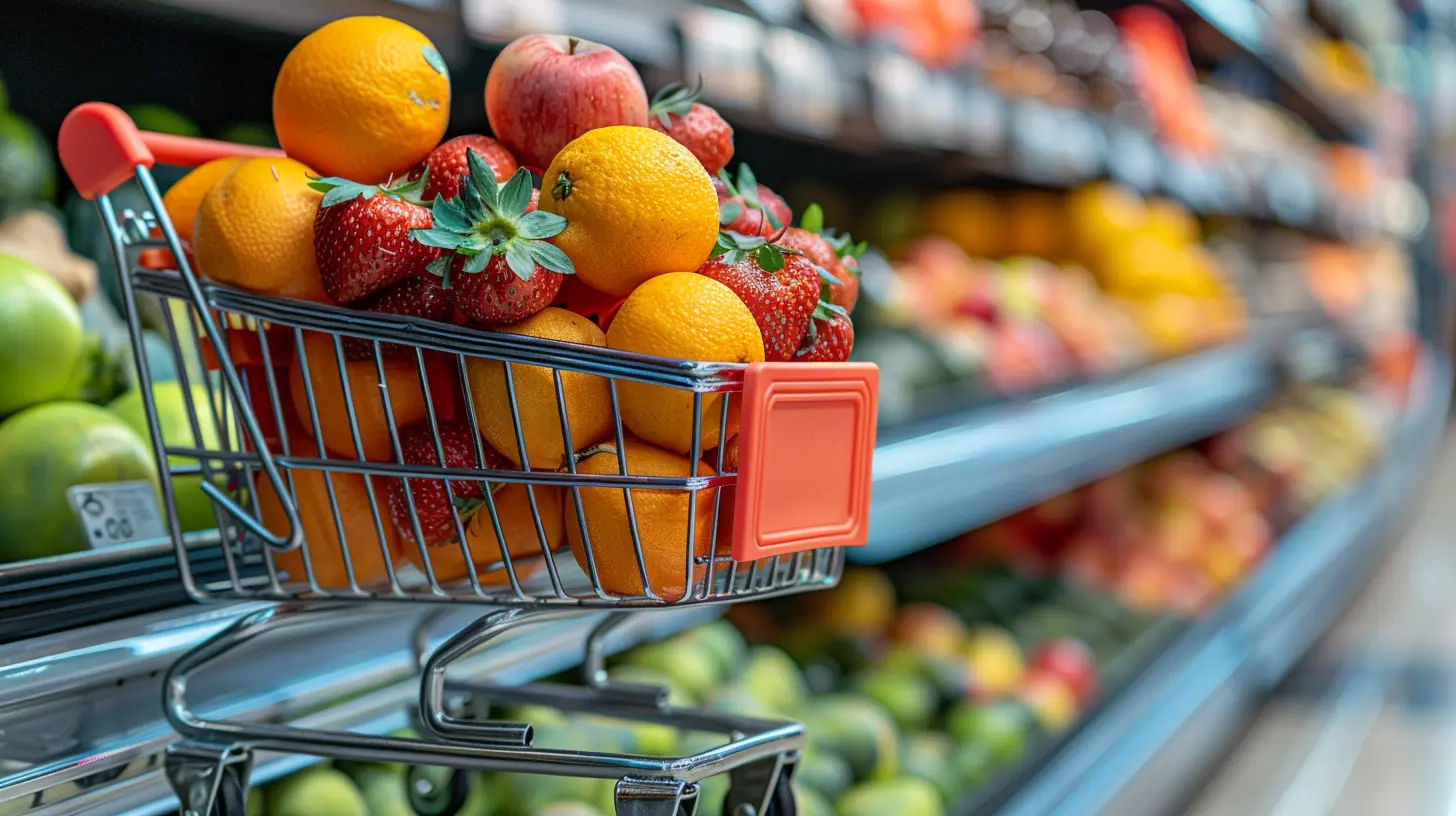
The Grocery Store: Where Most Long-Term Health Is Won or Lost
Diet quality remains one of the strongest predictors of cardiovascular disease, type 2 diabetes, certain cancers, and cognitive decline. And diet quality is largely a function of what is in your home. What is in your home is a function of what you buy.Frequency and trip structure
There is no universally correct shopping frequency. Weekly large trips reduce impulse purchases and save time, but they can lead to produce spoilage and mid-week gaps that trigger takeout. Smaller, more frequent trips keep fresh food available but increase exposure to impulse triggers and require more planning.A workable middle ground for many households is one main trip for staples plus one short mid-week trip for produce and perishables. The key variable is not frequency itself but whether your shopping pattern matches your cooking pattern. If you shop once a week but cook five nights, you need a plan for the back half of the week. If you shop daily but rarely cook, the food will rot.
Perimeter versus center aisles
The old advice to shop the perimeter and avoid the center aisles is partly true and partly oversimplified. The perimeter typically holds produce, meat, dairy, and bakery. The center aisles hold packaged goods, but they also hold beans, lentils, rice, oats, canned tomatoes, frozen vegetables, spices, and olive oil, all of which are staples of a healthy diet.The more useful distinction is between minimally processed and ultra-processed foods, not between locations in the store. Ultra-processed products are engineered for shelf stability, palatability, and convenience. They tend to be high in refined carbohydrates, sodium, added sugar, and industrial fats, and low in fiber and micronutrients. They are also heavily marketed and strategically placed. A person who fills a cart with canned beans, frozen spinach, plain oats, and olive oil from the center aisles is eating better than someone who buys only artisanal bread and cheese from the perimeter.
Unit price, portion distortion, and the bulk trap
Buying in bulk lowers unit cost, which is genuinely helpful for shelf-stable staples like rice, oats, dried beans, and frozen vegetables. But bulk buying becomes a health liability when it applies to snacks, sweets, and beverages. Larger packages increase consumption per sitting, a well-documented effect in food research. The savings per ounce are real; the extra calories and sugar are also real.A reasonable rule: buy in bulk only what you would eat in normal portions regardless of package size. If the larger bag changes your behavior, the unit price advantage is illusory.
Label reading that actually matters
Ingredient lists are more informative than front-of-package claims. Terms like "natural," "wholesome," and "made with real fruit" carry no standardized regulatory meaning in most contexts. What does carry meaning includes:- The order of ingredients, which reflects relative quantity
- Added sugars listed under multiple names (cane syrup, dextrose, maltodextrin, fruit juice concentrate)
- Sodium content per serving, which is often unrealistically small
- Fiber content, ideally from whole food sources rather than isolated fibers added for labeling purposes
- The presence of partially hydrogenated oils, which indicate trans fats
Serving size manipulation is a common tactic. A bottle of juice may list two or three servings, meaning the sugar content per container is two to three times what the label implies at a glance.
Online grocery shopping: convenience with trade-offs
Online grocery ordering reduces impulse purchases driven by in-store displays and hunger. It can also make budgeting easier and save time that might otherwise go to cooking or exercise. The trade-offs are worth naming. You cannot inspect produce, so quality varies. Substitutions may introduce items you would not have chosen. And the interface itself is designed to prompt add-ons, often in the snack and beverage categories.For people who struggle with in-store impulse buying, online ordering can be a genuine health tool. For people who enjoy selecting fresh food and use the store as a source of inspiration for cooking, it can feel restrictive. Neither approach is inherently superior; the right choice depends on which failure mode is more costly for you.

Non-Food Purchases and Cumulative Chemical Exposure
Health effects from consumer products are harder to study than diet effects because exposures are low, chronic, and mixed. Still, the patterns are worth understanding.Cleaning products
Many conventional cleaners contain volatile organic compounds that evaporate into indoor air. Indoor air quality is often worse than outdoor air quality, and cleaning products are a meaningful contributor. Frequent use of certain spray cleaners has been associated in some studies with respiratory symptoms, particularly in people with asthma.Alternatives include plain soap and water for most surfaces, vinegar and baking soda for routine cleaning, and ventilating rooms during and after use. You do not need to sterilize a home. Overuse of antimicrobial products offers little benefit outside specific medical or food-safety contexts and may contribute to resistance concerns.
Personal care and cosmetics
Skin is not a perfect barrier. Some chemicals in personal care products are absorbed, and others are inhaled or ingested incidentally, such as from lip products. Phthalates, parabens, and certain synthetic fragrances have been studied for potential hormonal effects. The evidence is not conclusive for any single product, but the cumulative exposure from dozens of daily products is a legitimate area of scientific interest.Practical steps include simplifying your routine, choosing fragrance-free options when fragrance is not essential, and prioritizing products that stay on the skin or near the eyes and mouth.
Furniture, mattresses, and textiles
Flame retardants, formaldehyde in some pressed wood products, and stain-resistant coatings can off-gas into indoor air for months. New furniture and mattresses often have a noticeable odor, which is a signal of volatile compounds. Air out new items in a well-ventilated space when possible, and consider solid wood or naturally finished alternatives when budget allows.Why "detox" framing misses the point
The goal is not to eliminate all chemical exposure, which is impossible. The goal is to reduce unnecessary exposure where it is easy and inexpensive to do so, and to avoid obsessing over trace exposures that carry uncertain risk. Spending heavily on "clean" products while ignoring diet, sleep, and movement is a misallocation of attention and money.
The Psychology of Buying: Impulse, Emotion, and Environment
Shopping decisions are shaped by context more than by intention. Understanding the levers helps you design your environment instead of fighting it.Hunger and mood
Shopping while hungry reliably increases purchases of high-calorie foods. This is not a character flaw; it is biology. A simple fix is to eat before you shop. Similarly, shopping while stressed or sad increases the likelihood of buying comfort foods and impulse items, because purchasing can temporarily regulate mood.Store layout and digital design
Retailers place staples at the back so you walk past tempting items. End caps feature promoted products, often snacks and soda. Checkout aisles are stocked with candy and magazines. Online, the equivalent tactics include recommended add-ons, urgency messaging, and subscription defaults.Recognizing these designs does not make you immune, but it reduces their power. A written list, a budget, and a rule against unplanned purchases are simple countermeasures.
The subscription and auto-ship trap
Subscriptions reduce friction and can lower cost. They also remove the moment of decision. If you subscribed to a snack or beverage delivery during a period of stress, you may still be receiving it months later without consciously choosing it. Audit subscriptions quarterly and cancel anything you would not actively reorder today.Emotional spending and health
Compulsive buying is a recognized behavioral pattern associated with anxiety, depression, and financial strain. Financial stress is itself a health risk, linked to worse sleep, higher blood pressure, and poorer mental health. If shopping has become a primary mood regulator, addressing the underlying issue is more valuable than any individual product swap.How Shopping Shapes Sleep, Stress, and Mental Health
The connection between shopping and sleep may seem indirect, but it runs through several channels.Caffeine and alcohol purchases directly affect sleep. A household stocked with energy drinks and late-night snacks supports poor sleep hygiene. A household stocked with herbal tea, plain yogurt, and fruit supports better choices at 10 p.m.
Financial strain from overspending is one of the most consistent predictors of insomnia and anxiety. Buying decisions that exceed your means create a slow-burning stressor that affects nearly every health behavior, from eating to exercise to medical care.
There is also a decision-fatigue effect. The more choices you face, the worse your subsequent decisions tend to be. Simplifying your shopping, through routines, lists, and repeat purchases, preserves mental energy for decisions that matter more.
Financial Health as a Health Outcome
It is impossible to discuss shopping and long-term health without addressing money. Chronic financial stress is associated with higher rates of cardiovascular disease, depression, and premature mortality. Shopping habits are one of the most controllable inputs into financial stability.Three patterns matter most:
1. Recurring small purchases that feel trivial individually but add up substantially over a year, such as daily coffee, convenience snacks, and delivery fees.
2. Large purchases made on impulse or under marketing pressure, such as upgraded phones, appliances, or furniture bought without comparison.
3. Subscription creep, where multiple small monthly charges accumulate without review.
None of these requires extreme frugality to fix. A quarterly review of recurring charges and a 24-hour rule for non-essential purchases above a set threshold captures most of the benefit.
Comparing Shopping Strategies: What Works and When
Different strategies suit different people and life stages. Here is an honest comparison.Meal planning plus one weekly trip. Best for households with predictable schedules. Strengths: lower cost, less waste, better diet quality. Weaknesses: requires planning time and flexibility when plans change.
Frequent small trips. Best for people who cook spontaneously or have limited storage. Strengths: fresher food, less spoilage. Weaknesses: more impulse exposure, more time.
Online ordering with pickup or delivery. Best for busy people and those prone to impulse buying. Strengths: time savings, budget control, fewer impulse purchases. Weaknesses: less control over produce quality, risk of unwanted substitutions.
Subscription meal kits. Best for people learning to cook or short on planning time. Strengths: portion control, reduced decisions, exposure to new recipes. Weaknesses: higher cost per meal, packaging waste, limited flexibility.
Warehouse club shopping. Best for large households with storage space. Strengths: low unit prices on staples. Weaknesses: bulk packaging encourages overconsumption of snacks, membership fees, and impulse purchases of non-essentials.
There is no single best approach. The right strategy is the one that matches your cooking habits, storage capacity, budget, and psychological tendencies.
Common Mistakes and Misconceptions
Mistake: Equating "healthy" labels with health. Many products marketed as healthy are ultra-processed with added sugar and low fiber. Judge by ingredient lists, not front-of-package claims.Mistake: Buying fresh produce with no plan. Spoiled produce wastes money and discourages future healthy buying. Frozen and canned vegetables are nutritionally comparable in many cases and far more forgiving.
Mistake: Treating one big healthy haul as a reset. Health comes from repeated patterns, not occasional efforts. Consistency beats intensity.
Misconception: Organic always means healthier. Organic standards address pesticide use and production methods, not nutritional content. An organic cookie is still a cookie. Organic matters most for certain produce and for personal priorities; it is not a universal health upgrade.
Misconception: Cheap food is always worse. Dried beans, oats, eggs, frozen vegetables, canned fish, and plain yogurt are among the most nutritious and affordable items in any store.
Misconception: Willpower is the answer. Environment design outperforms willpower almost every time. If the chips are not in the house, you will not eat them at midnight.
Practical Framework: Building Shopping Habits That Support Long-Term Health
A workable approach combines a few durable principles with flexibility for real life.1. Anchor your shopping to your cooking. Buy what you will actually prepare in the next seven days. If you cook three nights a week, shop for three nights plus breakfasts and lunches.
2. Build a core list of repeat purchases. Staples like oats, eggs, beans, rice, frozen vegetables, olive oil, and plain yogurt reduce decision fatigue and stabilize diet quality.
3. Set a simple rule for treats. Allow them, but decide in advance how many and where they live in your home. Out of sight is not perfect, but it helps.
4. Read ingredient lists, not marketing. If the list is long and full of unrecognizable additives, treat it as a sometimes food.
5. Audit subscriptions and recurring purchases quarterly. Cancel what you would not actively reorder.
6. Simplify non-food purchases. Fewer products, less fragrance, more ventilation. You do not need a different cleaner for every surface.
7. Protect your budget. Financial stability is a health intervention. A 24-hour rule for non-essential purchases above a set amount prevents most regret.
8. Review and adjust. What works in January may not work in July. Reassess every few months rather than abandoning the whole system when life changes.
When to Seek Professional Guidance
If shopping feels compulsive, if financial stress is affecting your sleep or mental health, or if you have a medical condition that requires specific dietary management, work with a qualified professional. A registered dietitian can help translate health goals into a practical shopping list. A therapist can help if buying has become a mood regulation strategy you cannot control. A financial counselor can help if debt is compounding the stress. These are not signs of failure; they are appropriate uses of expertise.The Bottom Line
Your shopping habits are not a minor logistical detail. They are the daily infrastructure of your health. They determine what you eat, what you breathe, what you absorb, how you sleep, how stressed you feel, and how financially secure you are. None of these connections requires perfection to matter. Small, repeated adjustments in how you buy things can shift your long-term trajectory more than any single dramatic change.Start with one habit. Eat before you shop. Write a list. Read one ingredient label. Cancel one subscription. Then build from there. The compounding effect over years is where the real health value lives.
all images in this post were generated using AI tools
Category:
Healthy ShoppingAuthor:

Madeline Howard