Yoga as a Natural Remedy for Chronic Stress
10 October 2026
Chronic stress is not a bad week. It is a physiological state that settles into the body and stays there. The nervous system stops treating threat as temporary and starts treating it as baseline. Cortisol rhythms flatten or shift, heart rate variability drops, sleep fragments, digestion becomes unpredictable, and the mind develops a hair-trigger for threat detection. This state is now common enough that many people mistake it for their personality. They think they are just anxious, or wired, or someone who cannot relax. Often, they are describing a stress response that never got the signal to stand down.
Yoga is frequently recommended for this problem, and just as frequently misunderstood. Some people picture a fitness class with loud music and a focus on flexibility. Others picture chanting and incense, which feels irrelevant to their actual life. Neither picture captures what makes yoga useful for chronic stress. The useful part is not the stretching and it is not the spirituality. It is the systematic training of the nervous system to shift out of threat mode and back into a state where recovery is possible.
This article explains how that works, when yoga is the right tool, when it is not, and how to practice in a way that actually addresses chronic stress rather than just adding another performance standard to your life.

Why Chronic Stress Is Different From Acute Stress
Acute stress is a survival feature. You get cut off in traffic, your body mobilizes, you respond, and then you return to baseline. The system is designed to turn on fast and turn off completely. Chronic stress is what happens when the "off" switch stops working properly.The physiology matters here. The sympathetic nervous system handles mobilization. The parasympathetic nervous system handles recovery, digestion, and repair. In chronic stress, sympathetic activity stays elevated while parasympathetic tone drops. The vagus nerve, which is the main pathway for parasympathetic signaling, becomes less active. This shows up as shallow breathing, tight jaw, elevated resting heart rate, poor digestion, and a mind that cannot stop scanning for problems.
The key insight is that chronic stress is not just a mental state. It is a learned physiological pattern. The body has practiced being on guard so many times that it now defaults to it. This is why telling someone to "just relax" does nothing. You cannot think your way out of a nervous system pattern. You have to retrain the pattern itself.
That retraining requires three things: awareness of what the body is doing, the ability to influence autonomic function voluntarily, and repetition over time. Yoga, done properly, provides all three.

How Yoga Actually Affects the Stress Response
Yoga works on chronic stress through several mechanisms that operate at the same time. Understanding them helps you practice with intention instead of just following along with a video.Breath as the Control Lever
Breath is the only autonomic function you can consciously control. Heart rate, blood pressure, and digestion run on autopilot, but breathing sits at the intersection of voluntary and involuntary control. This makes it a direct entry point into the nervous system.Slow breathing at roughly five to six breaths per minute increases vagal tone and shifts the system toward parasympathetic dominance. This is not a belief or a metaphor. It is measurable through heart rate variability, which reflects the balance between sympathetic and parasympathetic activity. Longer exhales relative to inhales tend to be especially effective because exhalation is linked to vagal activation.
This is why breath-focused yoga practices often produce calm faster than movement alone. The breath is doing the actual work. The postures are creating conditions where the breath can slow down without forcing it.
Movement That Releases Held Tension
Chronic stress creates physical holding patterns. Shoulders rise, the jaw clenches, the diaphragm tightens, hip flexors shorten. These are not separate from the stress response. They are part of it. Tight tissue sends feedback to the brain that reinforces the sense of threat.Yoga postures work on this feedback loop. Gentle backbends open the chest and counteract the collapsed posture of stress. Forward folds encourage the exhale and a sense of containment. Twists mobilize the spine and often produce a noticeable release in the mid-back, where many people carry tension without realizing it. Hip openers address the psoas, a muscle that connects the spine to the legs and is directly involved in the startle response.
The important point is that the movement does not need to be intense to be effective. In fact, intense movement can backfire in chronic stress by adding more sympathetic load. Slow, deliberate movement with attention to sensation is what changes the pattern.
Interoception and the Felt Sense of Safety
Interoception is your ability to sense what is happening inside your body. People with chronic stress often have poor interoception. They do not notice tension until it becomes pain. They do not notice shallow breathing until they feel dizzy. This disconnection makes it hard to catch stress early.Yoga trains interoception. When you hold a posture and observe sensation without immediately reacting, you are practicing the skill of noticing internal state. Over time, this awareness extends off the mat. You start to catch the jaw clench before it becomes a headache. You notice the breath has gone shallow before the anxiety fully forms.
This matters because the nervous system interprets accurate interoception as a sign of safety. When the brain has clear information about the body, it does not need to stay on high alert. Uncertainty is what drives hypervigilance. Clarity reduces it.
The Role of Attention and Cognitive Defusion
Chronic stress is maintained partly by rumination. The mind loops through threats, rehearses conversations, and generates catastrophic scenarios. Yoga interrupts this by giving attention a physical anchor. When you are trying to balance in a posture or coordinate breath with movement, there is less bandwidth for rumination.This is not distraction. It is training in cognitive defusion, the ability to observe thoughts without being pulled into them. The skill transfers. After enough practice, you can notice a stress thought arising and choose not to follow it, not because you are suppressing it, but because you have practiced returning attention to the present moment many times.

What the Research Suggests Without Overstating It
Yoga has been studied extensively for stress-related conditions. The general finding across many trials is that yoga can reduce perceived stress, improve mood, lower resting heart rate, and improve sleep quality in people who practice regularly. These effects appear in both healthy adults and people with conditions like anxiety disorders, depression, and chronic pain.What the research does not support is the idea that yoga is a cure-all or a replacement for medical treatment in serious cases. Studies vary widely in quality, style of yoga, duration, and population. Some show strong effects, others show modest ones. The honest summary is that yoga is a legitimate tool with real physiological effects, and it works best as part of a broader approach.
There is also a practical point that research often misses. The benefits depend heavily on how you practice. A fast-paced power yoga class that leaves you exhausted and comparing yourself to others may not reduce stress at all. It may increase it. The style, the teacher, and your own approach matter more than the label on the class.
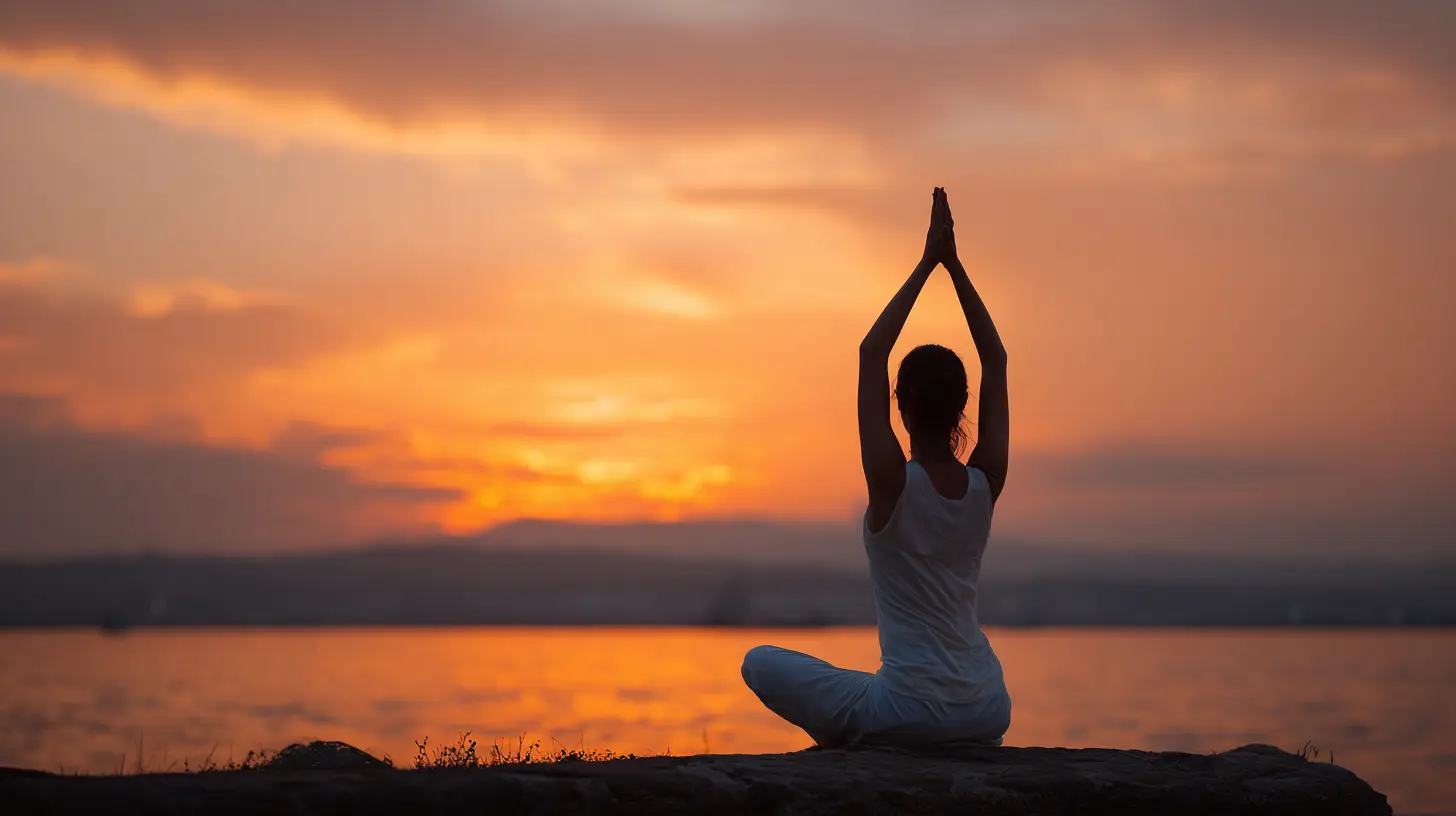
Which Styles of Yoga Help Most With Chronic Stress
Not all yoga is the same, and for chronic stress the differences matter.Gentle Hatha and Restorative Yoga
These styles move slowly, hold postures longer, and emphasize breath and relaxation. Restorative yoga uses props to support the body so that muscles can fully release. This is often the most appropriate starting point for someone in a chronic stress state, because it requires minimal effort and directly targets the parasympathetic system.The trade-off is that it can feel too slow for people who are used to intensity. Some interpret the lack of sweat as a lack of benefit. This is a mistake. The benefit is in the nervous system shift, not the calorie burn.
Yin Yoga
Yin involves long holds, often three to five minutes, targeting connective tissue and promoting deep relaxation. It can be very effective for stress, but it also requires patience and can bring up emotional material. Some people find long holds uncomfortable or triggering. It is worth trying, but not necessarily the first choice if you are highly activated.Vinyasa and Flow Yoga
Flow styles link movement with breath in a continuous sequence. They can be beneficial because the rhythm and breath coordination are soothing, and the physical engagement provides an outlet for stress energy. However, if the pace is fast or the class is competitive, it can push the nervous system further into sympathetic activation.The key variable is intensity relative to your current state. If you are depleted, a vigorous flow may exhaust you further. If you are agitated and need to discharge energy, a moderate flow can help.
Breath-Focused Practices Like Pranayama
Pranayama, the practice of controlled breathing, may be the most direct tool for chronic stress. Techniques like alternate nostril breathing, extended exhale breathing, and coherent breathing at around five to six breaths per minute have measurable effects on autonomic balance. These can be practiced in five to ten minutes and do not require a mat or a class.For many people, a short daily pranayama practice produces more noticeable stress reduction than a weekly yoga class. The frequency matters more than the duration.
Building a Practice That Actually Works
The biggest mistake people make with yoga for stress is treating it like a workout. They push, they compare, they chase progress. This recreates the same striving mindset that drives chronic stress in the first place.A better approach has a few core principles.
Start Small and Consistent
Ten minutes daily is more effective than ninety minutes once a week. The nervous system responds to repetition. Short, frequent practice builds the new pattern faster than occasional long sessions.A simple daily routine might include a few minutes of slow breathing, some gentle movement like cat-cow or a forward fold, and a short relaxation at the end. That is enough to start.
Prioritize the Exhale
In every practice, pay attention to the exhale. Let it be longer than the inhale. Do not force it. Just allow it to lengthen gradually. This single focus can shift the entire practice toward parasympathetic activation.Drop the Performance Mindset
If you find yourself frustrated that you cannot touch your toes or hold a pose as long as the person next to you, you have left the stress-reduction frame and entered the achievement frame. Notice it and return to sensation. The goal is not the shape of the pose. The goal is the state of the nervous system.Use Props Without Apology
Blocks, straps, bolsters, and blankets are not signs of weakness. They are tools that allow the body to release without strain. In restorative practice, props are essential. Using them well is a sign of skill, not limitation.End With Rest
Savasana, the final relaxation, is often the most important part of the practice for stress. It is where the nervous system consolidates the shift. Skipping it to save time is like taking medicine and then immediately vomiting it up. Stay for the rest.
Common Mistakes and Misconceptions
Several myths and errors keep people from getting the most out of yoga for stress.Myth: You need to be flexible to do yoga. Flexibility is a result of practice, not a prerequisite. Stiff people benefit just as much, often more, because they have more room to improve and less tendency to overdo it.
Mistake: Pushing through pain. Yoga should not hurt. Discomfort is different from pain. Sharp, shooting, or joint pain means stop. Chronic stress often dulls body awareness, so it is easy to override signals. Learn to distinguish sensation from damage.
Mistake: Treating yoga as a substitute for medical care. Yoga is a complement, not a replacement. If you have a diagnosed anxiety disorder, depression, or a stress-related medical condition, yoga can support your treatment but should not replace it. Work with your healthcare provider.
Misconception: More intense is better. For chronic stress, the opposite is often true. Gentle, consistent practice usually outperforms intense, sporadic practice.
Mistake: Ignoring the breath. Moving through postures without attention to breath turns yoga into stretching. The breath is what makes it a nervous system practice.
When Yoga Is Not the Right Tool
Yoga is not appropriate for everyone in every situation. There are times when it should be approached with caution or avoided.If you have a history of trauma, certain practices can trigger flashbacks or intense emotional reactions. This is not a reason to avoid yoga entirely, but it is a reason to work with a trauma-informed teacher and to go slowly. Grounding practices and choice-based instruction are important. If a practice feels unsafe, stop.
If you have acute injuries, recent surgery, or certain medical conditions like uncontrolled high blood pressure or glaucoma, some postures and breath practices may be contraindicated. Inversions and forceful breath retention are common examples. Check with a qualified professional before starting.
If you are in a state of severe depression or acute crisis, yoga alone is not enough. It can be part of a recovery plan, but it should not be the whole plan.
Finally, if yoga is adding stress rather than reducing it, that is a signal to change something. Maybe the style is wrong. Maybe the teacher is wrong. Maybe the timing is wrong. Maybe you need a different tool entirely. Yoga is not a moral obligation.
Practical Examples and Real-World Scenarios
Consider a few common situations and how yoga might fit.A desk worker with tight shoulders and poor sleep. A ten-minute evening routine with gentle neck and shoulder stretches, a supported forward fold, legs-up-the-wall, and slow breathing before bed can improve sleep onset and reduce muscle tension. The key is doing it consistently and keeping it gentle.
A caregiver with no time for herself. Two five-minute breathing breaks during the day, one in the morning and one in the afternoon, can lower baseline arousal. This is not ideal, but it is realistic. Consistency beats intensity.
A person recovering from burnout. Restorative yoga two or three times a week, plus daily breath work, is often more appropriate than a vigorous class. The goal is to rebuild capacity, not to test it.
Someone with high anxiety and racing thoughts. A practice that emphasizes long exhales, slow movement, and grounding postures like standing poses with attention to the feet can be more helpful than seated meditation, which can amplify rumination for some people.
How to Know It Is Working
The signs that yoga is helping with chronic stress are often subtle and appear gradually.Sleep improves. You fall asleep faster and wake less. Digestion becomes more regular. You notice tension earlier and can release it. Your resting heart rate may drop slightly. You recover from stressful events faster. You have more moments of feeling neutral or calm rather than constantly activated.
These changes typically take weeks, not days. Expecting immediate results sets you up for disappointment. The nervous system rewires slowly. Patience is part of the practice.
Final Thoughts
Chronic stress is a physiological pattern, and patterns can be changed. Yoga offers a structured way to do that, not because it is mystical, but because it combines breath control, movement, interoception, and attention training in a single practice. Each of these elements has a direct effect on the nervous system. Together, they create conditions for the body to remember what safety feels like.The most important variables are consistency, gentleness, and attention. The style matters less than how you approach it. A short daily practice done with care will outperform a long weekly practice done with striving.
If you are dealing with chronic stress, start small. Breathe slowly. Move gently. Rest fully. Repeat. That is the whole method. Everything else is detail.
all images in this post were generated using AI tools
Category:
Yoga BenefitsAuthor:

Madeline Howard