Yoga and Aging Gracefully: Health Tips for the Future
10 September 2026
Aging is not a slow decline into frailty. It is a long arc of change, and how you meet that change determines the quality of your later decades. Yoga, when practiced with intelligence and consistency, offers one of the most reliable pathways to aging well because it addresses the whole system: muscles, bones, balance, breath, digestion, and the mind. It is not about twisting yourself into a pretzel at seventy. It is about maintaining the ability to get up off the floor, carry groceries, play with grandchildren, and sleep soundly. Let us look at what yoga actually does for the aging body, and how you can build a practice that serves you for the next thirty or forty years.
Why Yoga Works for the Aging Body
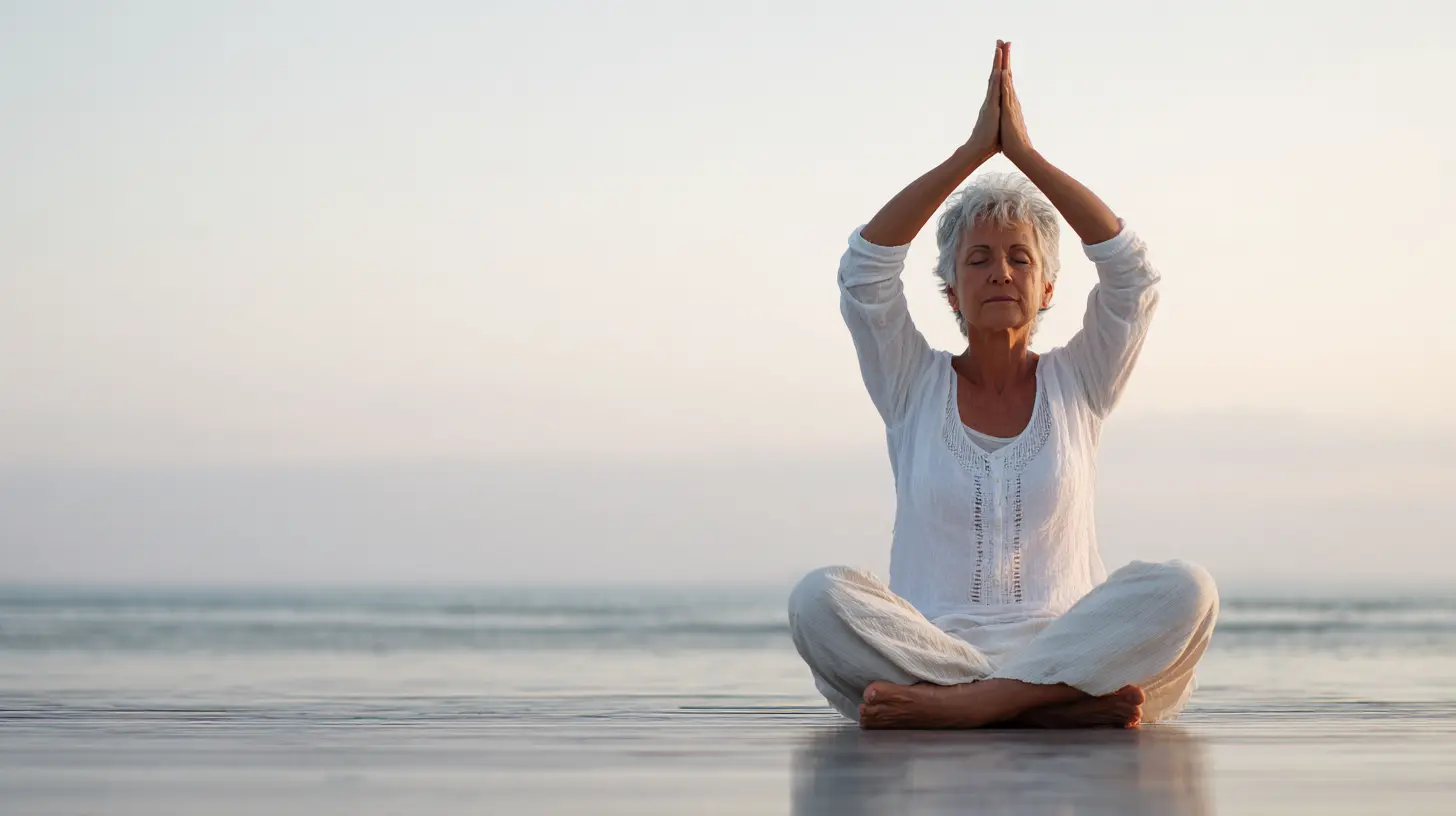
Most exercise programs focus on one dimension. Weightlifting builds strength but often ignores flexibility. Running builds cardiovascular endurance but does little for balance or joint mobility. Swimming is gentle but lacks the weight-bearing stimulus your bones need. Yoga is unusual because it trains multiple physical qualities at once, and it does so in a way that is infinitely scalable to your current capacity.The core physiological benefits are well established. Yoga improves proprioception, which is your body's ability to sense its position in space. This is the foundation of balance and fall prevention. It maintains or restores joint range of motion by moving synovial fluid through the cartilage, which is how joints stay nourished without direct blood supply. It builds isometric strength in the muscles that stabilize the spine, hips, and shoulders. And it trains your vestibular system through head positions that change with each pose, which keeps your inner ear calibrated for real-world movements.
Beyond the physical, yoga has a profound effect on the nervous system. Slow, coordinated breathing activates the vagus nerve, which shifts your body out of the fight-or-flight state and into rest-and-digest. Over time, this lowers resting cortisol levels, reduces inflammation markers, and improves sleep quality. These are not fringe benefits. Chronic inflammation is a driving factor in nearly every age-related disease, from arthritis to heart disease to cognitive decline. A practice that reduces your inflammatory load is doing heavy lifting behind the scenes.
Starting a Practice After 50: What You Need to Know
If you have never done yoga, or if you did it in your twenties and stopped, the first step is not to sign up for the hardest class you can find. It is to understand that your body has different rules now. Ligaments become less elastic, tendons lose some of their spring, and the intervertebral discs in your spine lose water content, making them shorter and stiffer. That is not a reason to avoid yoga. It is a reason to practice with more attention and less ego.The Myth of the Perfect Pose
A common mistake is assuming that a pose has one correct shape and that you need to force your body into it. That belief leads to injury. The truth is that a pose is correct when it creates the intended effect without pain. For a person with tight hamstrings, a forward fold might mean placing your hands on your thighs. For someone with a history of shoulder impingement, a downward dog might mean keeping the hands higher on a chair. The pose serves you. You do not serve the pose.Start With a Chair and a Mat
If you are very deconditioned or have balance concerns, begin with chair-supported versions of standing poses. Chair yoga is not lesser yoga. It is intelligent yoga. A chair gives you the ability to practice lunges, twists, and forward folds safely while still getting meaningful muscle activation. As your strength and confidence grow, you can move to the mat and eventually try standing poses without support.The First Two Weeks Are About Habit, Not Intensity
Commit to fifteen minutes a day for two weeks. Do the same simple sequence every day. This repetition builds neurological pathways and makes the practice automatic. After two weeks, you will feel a difference in how your body moves, and that positive feedback will pull you forward. Do not start with an hour-long class three times a week. That is a recipe for soreness, frustration, and quitting.
The Five Pillars of Yoga for Longevity
A well-rounded practice for aging well rests on five pillars. Each one addresses a specific vulnerability that emerges as we get older. You need all five, but you can weight them differently depending on your current weaknesses.1. Balance Work: The Safety Net
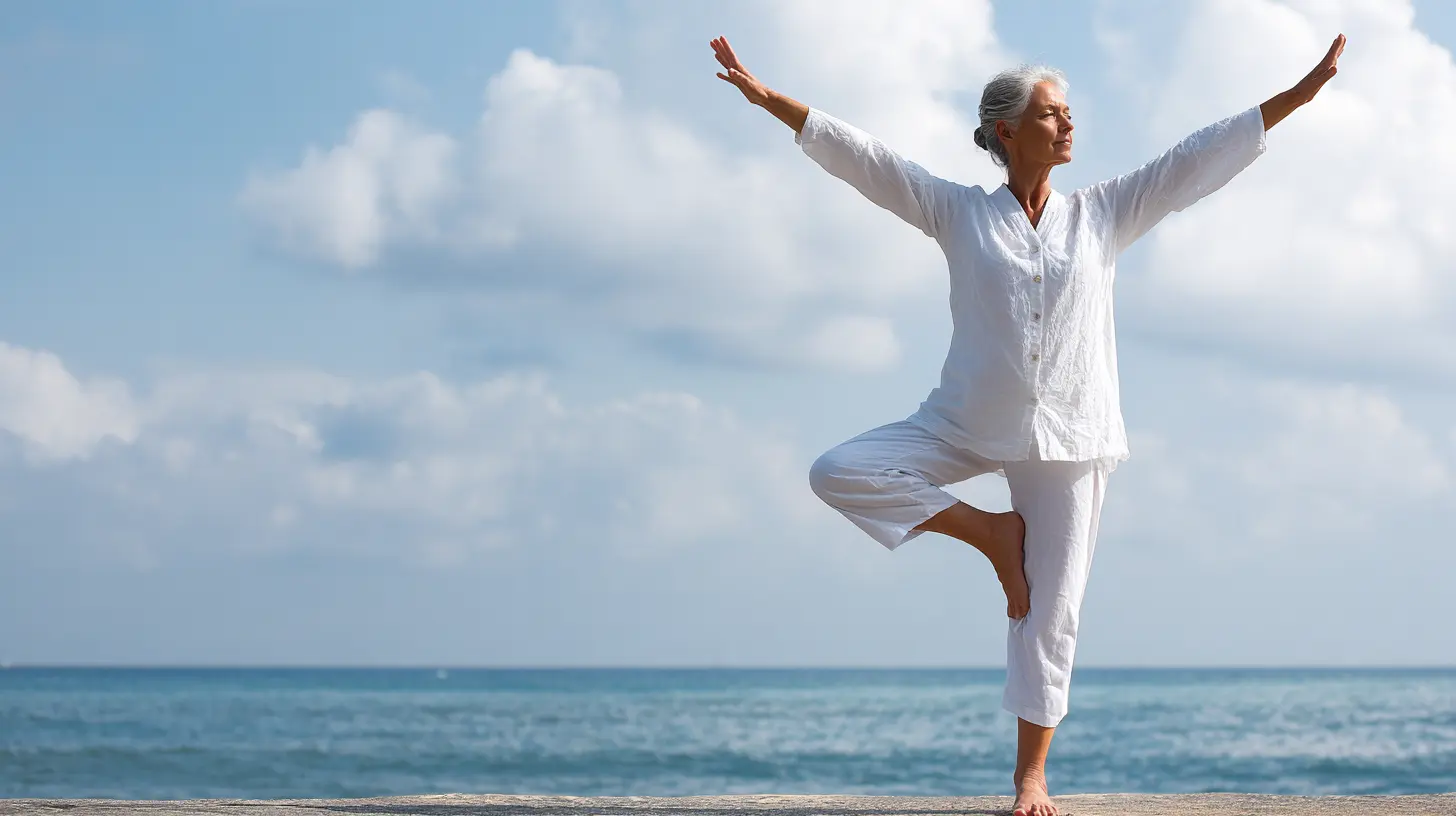
Falls are the single greatest risk to independence in later life. A hip fracture at age seventy has a mortality rate that rivals many cancers, and the loss of mobility that follows often marks the beginning of a steep decline. Balance is not something you have or do not have. It is a skill that degrades without practice and improves quickly with it.Yoga offers a progressive ladder for balance. Start with standing on both feet while shifting your weight side to side. Move to standing on one foot while holding a wall. Then try tree pose with your foot placed on your calf, not your knee. Then practice standing on one foot while moving your arms overhead. Each level challenges your ankle stabilizers, your vestibular system, and your visual focus.
The key is to practice balance every day, even if only for three minutes. Your body needs frequent, low-stakes challenges to maintain its fall-prevention reflexes. A weekly balance class is not enough. Daily micro-practice is what rewires the system.
2. Spinal Mobility: The Anti-Stiffness Project
Back pain is one of the most common reasons older adults visit a doctor. Much of it comes from a spine that has become stiff because it has not been moved in all its available directions. The spine is designed to flex forward, extend backward, bend sideways, and rotate. Most of modern life involves only flexion: sitting, driving, looking at a phone. The other movements become rusty.Yoga restores these movements through poses like cat-cow for flexion and extension, seated twists for rotation, and side bends for lateral flexibility. The goal is not to achieve dramatic ranges of motion. It is to keep all the spinal segments moving so that no single disc or joint takes on excessive load.
A useful analogy is a rusty hinge. If you try to force it open quickly, it may break. If you oil it and move it gently through its full range every day, it becomes smooth. Your spine is the same. Daily gentle movement through all planes is the oil.
3. Strength Through Isometrics and Bodyweight
Muscle mass peaks in your late twenties and then slowly declines. After fifty, the rate of loss can accelerate to one to two percent per year if you do not intervene. This condition, sarcopenia, is not inevitable. It is a use-it-or-lose-it process.Yoga builds strength primarily through isometric contractions, where the muscle tenses but does not change length. Plank pose strengthens the core, shoulders, and chest. Chair pose strengthens the quadriceps and glutes. Warrior poses strengthen the legs and hips. These are not replacements for lifting heavy weights, but they are excellent for maintaining functional strength, especially for the stabilizer muscles that protect your joints.
For older practitioners, the focus should be on time under tension rather than depth of pose. Holding a shallow squat for thirty seconds builds more strength than briefly dipping into a deep squat with poor form. Muscles respond to sustained effort, not to how low you go.
4. Breath Control: The Nervous System Dial
Most people breathe shallowly, using only the upper chest. This pattern signals stress to the nervous system and becomes more pronounced with age as the rib cage stiffens and the diaphragm weakens. Yoga breathing, or pranayama, directly addresses this.The most useful technique for aging is extended exhale breathing. Inhale for four counts, exhale for six or eight. This simple pattern activates the parasympathetic nervous system, slows the heart rate, and lowers blood pressure. It is also a practical tool for managing anxiety, which often increases in later life due to health concerns or loss of loved ones.
Another powerful technique is diaphragmatic breathing, where you place a hand on your belly and ensure it rises with each inhale. This strengthens the diaphragm, which is a muscle that needs exercise like any other. A strong diaphragm improves respiratory efficiency and can reduce the feeling of breathlessness during everyday activities like climbing stairs.
5. Rest and Recovery: The Forgotten Pillar
Yoga is not only about effort. It is also about deliberate rest. As you age, your recovery capacity decreases. You cannot push hard every day and expect to bounce back. Savasana, or corpse pose, is not an afterthought. It is where the nervous system integrates the work you have done.In a typical yoga class, savasana lasts five to ten minutes. At home, you can practice a shorter version: lie on your back with your legs supported on a chair or bolster, close your eyes, and breathe slowly for five minutes. This is not laziness. It is a physiological reset that lowers cortisol, reduces muscle tension, and improves sleep quality. If you skip this part, you are missing a major benefit of the practice.
Common Mistakes That Accelerate Aging
Even with good intentions, many people practice yoga in ways that harm rather than help. Here are the most common errors and how to avoid them.Pushing Through Pain
There is a difference between discomfort and pain. Discomfort is a stretching sensation in the belly of a muscle. Pain is a sharp, pinching, or burning feeling, often near a joint. If you feel pain, you must stop and modify. The old adage of no pain no gain is dangerous for aging joints. A torn meniscus or a strained rotator cuff can set you back months. Respect pain as a signal, not an obstacle to overcome.Holding Your Breath
It is surprisingly common for beginners to hold their breath during challenging poses. This increases blood pressure and creates unnecessary tension. If you cannot breathe steadily in a pose, you are doing too much. Back off until your breath flows naturally. The breath is your guide to appropriate intensity.Comparing Yourself to Others
In a group class, it is tempting to look at the person next to you and match their range of motion. This is a mistake. Their anatomy, injury history, and flexibility are completely different from yours. The person who looks most impressive in a class is often the one most likely to injure themselves. Your practice is yours alone. Progress is measured by how you feel, not by how you look.Neglecting the Hips
Hip stiffness is a hidden driver of back pain and knee problems. Tight hip flexors, which come from prolonged sitting, tilt the pelvis forward and compress the lower back. Yoga poses like low lunge and pigeon pose stretch the hip flexors and rotators. If you sit for work, you need these poses more than you need hamstring stretches.A Sample Weekly Practice for Aging Well
You do not need to go to a studio to benefit from yoga. A home practice, done consistently, is more valuable than an occasional class. Here is a balanced weekly template.Monday: Balance and Strength
Start with five rounds of sun salutation A at a gentle pace. Then spend ten minutes on standing balance poses: tree pose, warrior three with a chair for support, and half moon pose against a wall. Finish with two minutes of extended exhale breathing.Tuesday: Spinal Mobility
Focus on cat-cow for two minutes, then seated twists, side bends, and gentle backbends like sphinx pose. Hold each pose for five slow breaths. Finish with a supported bridge pose for two minutes.Wednesday: Restorative
Do a gentle sequence of supine poses: knees to chest, happy baby, and a supported fish pose. Spend ten minutes in legs-up-the-wall pose. This day is about nervous system recovery.Thursday: Strength and Endurance
Repeat Monday's format but add more repetitions. Hold chair pose for thirty seconds, do ten slow squats with a chair behind you, and practice plank pose on your knees if needed. The goal is muscular fatigue, not joint pain.Friday: Full Practice
Combine elements from the week. Do fifteen minutes of standing poses, ten minutes of floor poses, and five minutes of breathing. This is your integration day.Weekend: Active Recovery
Take a short walk and do ten minutes of gentle stretching. Focus on the areas that feel stiff from the week. This is not a day off from movement. It is a day off from structure.
The Mental and Emotional Benefits of Aging With Yoga
The physical benefits of yoga are well documented, but the mental shifts are just as important. Aging brings losses: of loved ones, of roles, of physical capacities. How you process those losses determines your quality of life.Yoga teaches you to observe discomfort without panic. When you hold a challenging pose and breathe through the urge to escape, you are training your mind to handle difficulty. That skill transfers directly to the challenges of aging. A cancer diagnosis, a move to a smaller home, the loss of a spouse: these are all situations where you cannot fix the problem, only your response to it. Yoga gives you a way to practice that response.
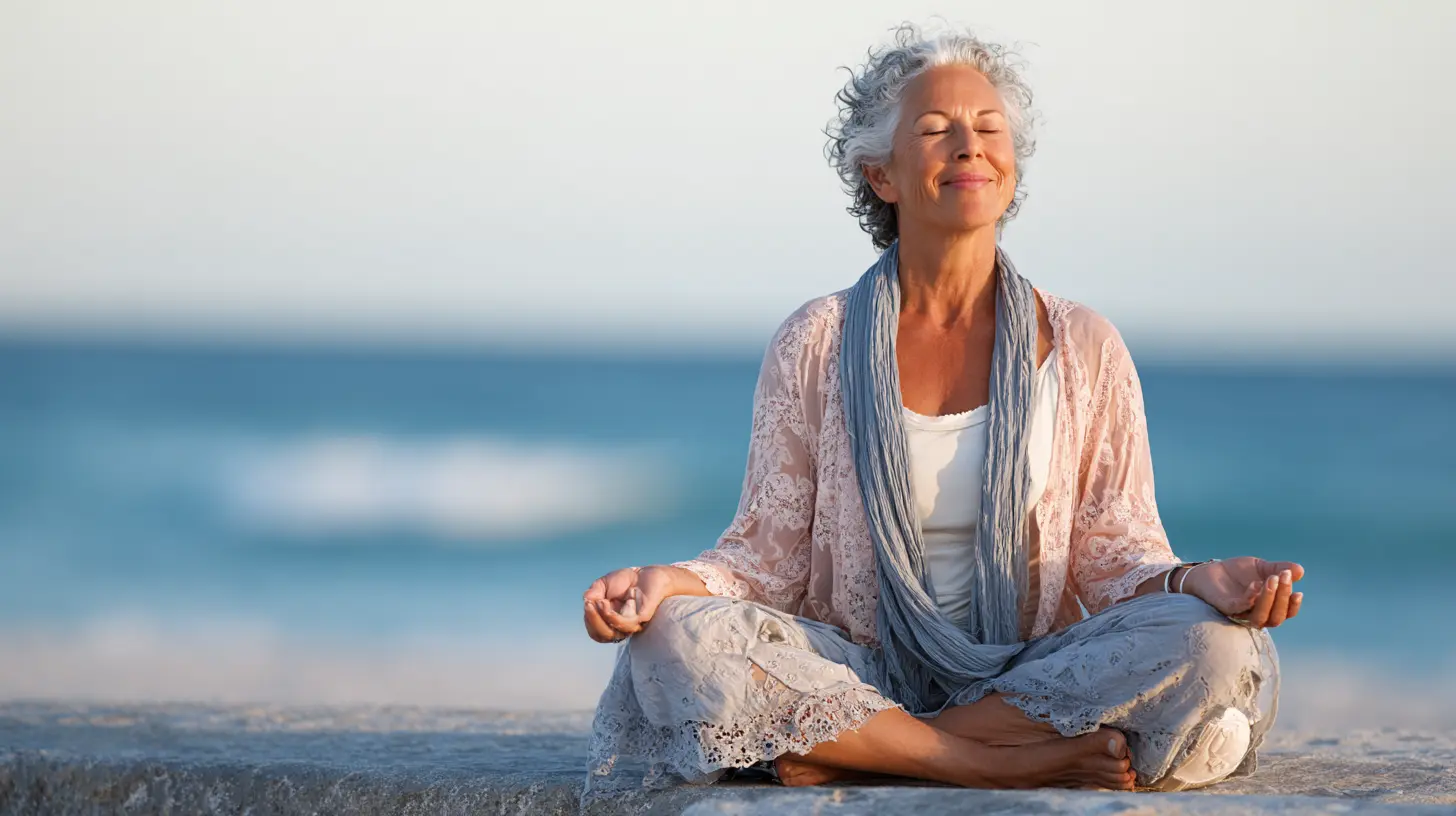
The meditative aspects of yoga also address the fear of death, which becomes more present as we age. By sitting with stillness and watching your thoughts, you become more comfortable with the idea of impermanence. This is not morbid. It is liberating. When you stop fighting the reality of change, you free up energy to enjoy the present moment.
Adapting Yoga for Specific Conditions
If you have osteoarthritis, high blood pressure, or osteoporosis, you can still practice yoga, but you need to adapt it.Osteoarthritis
For arthritis in the knees or hands, avoid deep flexion. Use a chair for squats, and keep your hands in fists during poses that put weight on your palms. Warm water exercise combined with yoga is often the gentlest entry point. The goal is to keep joints moving without loading them heavily.High Blood Pressure
Avoid inversions where your head goes below your heart, such as full downward dog or headstand. These can spike blood pressure. Focus on standing poses with normal head position and emphasize exhale-heavy breathing. If you feel dizzy, stop and sit down.Osteoporosis
If you have been diagnosed with osteoporosis, avoid deep spinal flexion, like forward folds with a rounded back, because this compresses the front of the vertebrae. Instead, focus on extension-based poses like cobra and locust, which strengthen the back muscles and encourage better posture. Always work with a qualified instructor who knows your bone density score.
Nutrition and Yoga: The Missing Link
Yoga is more effective when combined with adequate protein intake. Muscle synthesis requires protein, and older bodies need slightly more than younger ones to get the same response. Aim for twenty-five to thirty grams of protein per meal, from sources like eggs, fish, dairy, legumes, and lean meat. Hydration also matters. Yoga increases circulation and promotes sweating, so you need to replace fluids. Dehydration accelerates joint stiffness and impairs balance. Drink water throughout the day, not just during practice.The Real Measure of Success
The success of a yoga practice for aging is not measured by how deep you can fold or how long you can balance on one leg. It is measured by your ability to rise from a chair without using your hands. It is measured by your confidence walking on uneven ground. It is measured by sleeping through the night without waking in pain. It is measured by the ease with which you bend down to tie your shoes or pick up a grandchild.Yoga gives you a way to invest in your future self. Every time you practice, you are telling your body that you plan to keep using it. That message matters. The body responds to what you ask of it, and if you ask it to stay mobile, strong, and balanced, it will do its best to comply.
Start where you are. Use what you have. Do what you can. The practice is not about perfection. It is about showing up, over and over, for the decades ahead.
all images in this post were generated using AI tools
Category:
Yoga BenefitsAuthor:

Madeline Howard
Discussion
rate this article
1 comments
Valeria Ellison
This article beautifully highlights the benefits of yoga for aging gracefully. It's inspiring to see practical tips that encourage not just physical health, but also mental well-being. Thank you for sharing such valuable insights.
September 10, 2026 at 3:54 AM