What to Wear for Your First Workout Without Overthinking It
17 October 2026
Your first workout does not require a new wardrobe. It requires clothes that stay put, do not chafe, and let you move without a running commentary in your head about how you look. That is the whole assignment. Everything else is marketing.
Most people who quit early do not quit because their leggings lacked compression panels. They quit because they felt awkward, uncomfortable, or self-conscious. Clothing contributes to that more than anyone admits. A waistband that rolls down, a shirt that rides up during a stretch, shoes that pinch on the treadmill: these small annoyances stack up and turn a manageable workout into a test of patience.
So let us strip this down to what actually matters. Here is how to dress for your first workout without turning it into a research project.
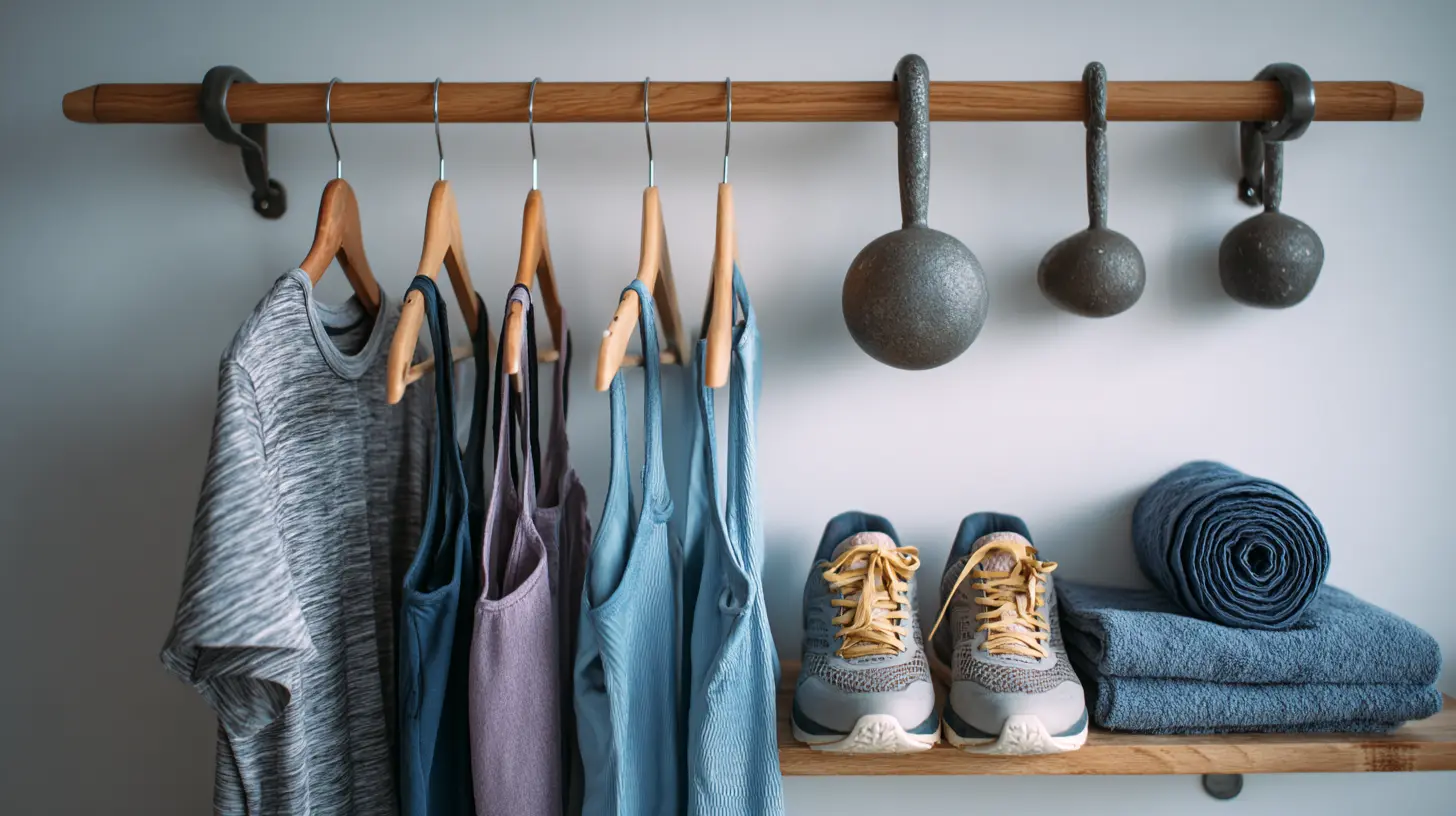
The Only Three Things Your Clothes Must Do
Before you buy anything, understand the job description. Workout clothes have three real functions.They must let you move. If you cannot lift your arms overhead, squat, or jog without something digging in or sliding out of place, the garment fails regardless of how it looks.
They must manage moisture. Cotton holds sweat against your skin. That feels heavy, gets cold when you stop moving, and can cause chafing. Synthetic blends or merino wool move moisture away from your body so it can evaporate.
They must not distract you. This is the underrated one. If you are tugging at a hem, adjusting a strap, or worrying about whether something is see-through, you are not focused on the workout. Distraction is the enemy of consistency.
Everything else, and I mean everything, is optional. Color, brand, matching sets, compression level, fabric technology with a trademarked name: optional. Useful sometimes, but not the foundation.
Start With What You Already Own
You probably have clothes in your closet right now that will work for a first workout. This matters because buying gear before you know your preferences is how people end up with a drawer full of things they never wear.Here is a quick test. Put on the candidate outfit. Then do the following in your living room:
- Ten bodyweight squats
- Ten jumping jacks, or a gentler substitute like marching in place if you have neighbors below you
- Reach both arms overhead and bend side to side
- Jog in place for thirty seconds
If nothing rides up, rolls down, pinches, or feels like it might fall off, you are good to go. If something fails, you have identified a specific problem to solve, which is much better than buying blindly.
For a first session, this often means a plain t-shirt that is not too loose (baggy shirts swing and get in the way) and shorts or sweatpants with an elastic waist. That is genuinely fine for a gym, a park, a living room, or a beginner class.
What to Avoid From Your Regular Clothes
- Jeans and other stiff fabrics. No stretch, no airflow, and they will chafe.- Heavy cotton hoodies for intense cardio. You will overheat. For gentle activity in cold weather, a hoodie is fine.
- Anything with a lot of zippers, buckles, or hardware. Metal against skin during floor exercises is unpleasant.
- Very loose tank tops with thin straps if you plan to bend over. Gravity is not on your side here.
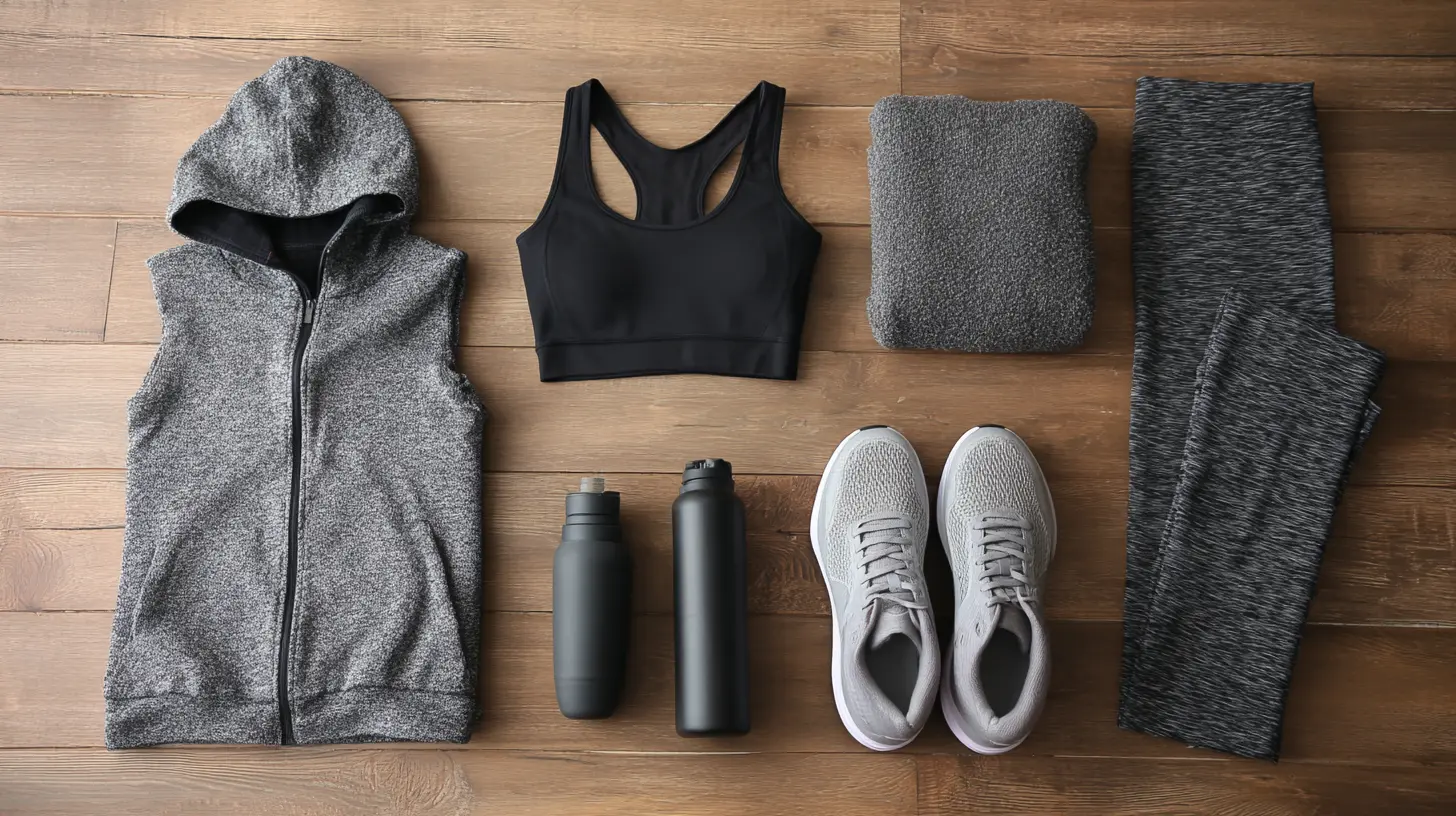
Fabric: The One Place Worth Paying Attention
If you take one technical concept from this article, make it this one: material matters more than cut, brand, or price.Cotton is comfortable until it gets wet. Then it becomes a wet towel wrapped around your body. For low-intensity activities like gentle yoga or a short walk, cotton is acceptable. For anything that makes you sweat properly, it works against you.
Synthetic fabrics like polyester, nylon, and spandex blends wick moisture and dry quickly. They are also cheap to produce, which is why most affordable activewear uses them. The trade-off is that some synthetics hold onto odor over time. Washing them promptly and avoiding fabric softener helps significantly, because softener coats the fibers and reduces their ability to wick.
Merino wool is the premium option. It regulates temperature, resists odor naturally, and feels comfortable against skin. It is also expensive and requires more careful washing. For a first workout, it is overkill unless you already own it or you know you run hot and sweat heavily.
Bamboo-based fabrics sit somewhere in the middle. They are soft and breathable but can lose shape over time and are often blended with synthetics anyway.
A practical rule: check the label. If you see a high percentage of polyester, nylon, or elastane, you have a moisture-friendly fabric. If cotton dominates, save it for low-sweat days.
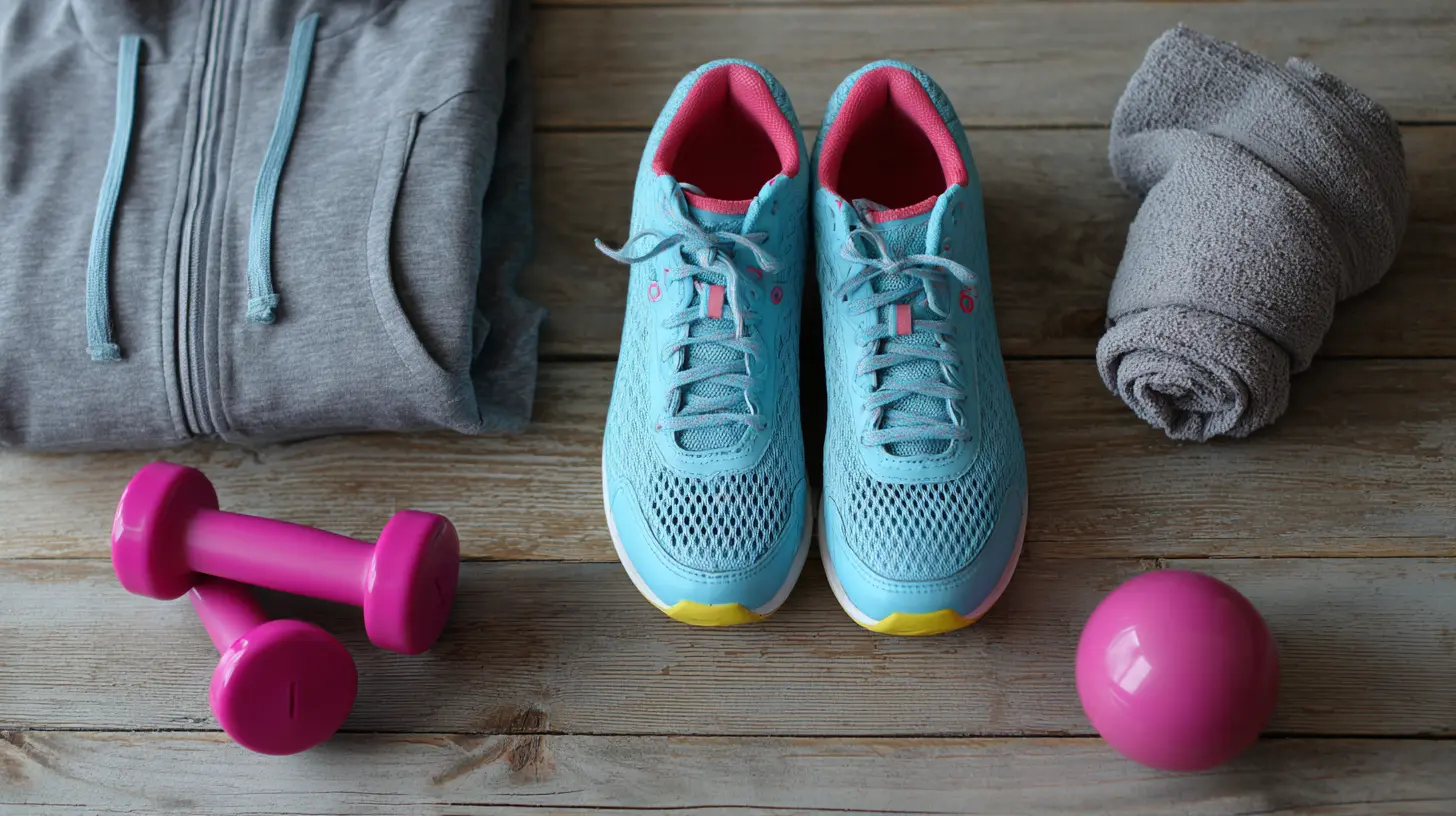
Tops: Keep It Simple
Your top needs to cover what you want covered, stay in place, and not trap heat. That is it.A fitted or semi-fitted t-shirt in a synthetic blend handles most situations. Fitted is not the same as tight. You want the fabric close enough that it moves with you rather than swinging independently, but loose enough that you can breathe and do not feel self-conscious.
Tank tops work well for warmer environments and for activities where you want more airflow. The caveat is strap placement. Thin straps slide off shoulders during arm movements. Racerback designs solve this because the straps converge toward the center of your back, which keeps them anchored.
Long sleeves are useful for outdoor workouts in cool weather, for activities where your arms might scrape against equipment or the ground, and for people who simply prefer more coverage. There is no rule against long sleeves indoors, but you will warm up faster.
Common Mistakes With Tops
- Wearing an oversized shirt because you feel self-conscious. This is understandable, and I am not going to pretend it does not matter. But oversized shirts bunch up, get in the way during certain exercises, and can actually draw more attention when you are constantly adjusting them. A well-fitting shirt in a color you like will serve you better.- Choosing a shirt with a scratchy tag or rough seams. During a workout, small irritations become big ones. Cut the tag or choose tagless designs.
- Layering too much indoors. You will overheat within ten minutes.
Bottoms: Where Most First-Timers Get It Wrong
Bottoms cause more first-workout misery than any other category. Here is why: they have to stay in place through movement, and movement is exactly what makes waistbands fail.Shorts are the simplest choice for most indoor workouts and warm weather. Look for an elastic waistband that sits flat against your body, and a fabric with some stretch. Lined shorts, meaning shorts with a built-in brief or compression layer, reduce chafing and prevent exposure during leg lifts. If you are doing activities like cycling or certain mat exercises, longer shorts or compression shorts reduce the risk of riding up.
Sweatpants and joggers work well for cooler environments, strength training, and activities where you are not moving at high speed. The risk is heat. Heavy fleece sweatpants during a spin class is a recipe for misery. Lightweight joggers with tapered ankles are more versatile.
Leggings are popular for good reason. They stay in place, do not restrict movement, and work across nearly every activity. The critical factors are opacity and waistband construction. Squat test them in a mirror under bright light before you commit. A high-rise waistband that sits above your hip bones tends to stay put better than a low-rise one, because it has more surface area to grip and does not sit on the hinge point of your hips.
The Waistband Problem, Explained
Waistbands roll down for two reasons. Either the band is too narrow, so it cannot distribute tension, or the fit is wrong, usually too small, which means the fabric is stretched tight and pulls downward. A wider waistband with a bit of structure solves most rolling issues. So does sizing up.This is the part where ego gets in the way. Sizes vary wildly between brands, and a number on a tag has no bearing on your worth or your fitness. Buy what fits the body you have today.
Underwear and Sports Bras: The Unsexy Essentials
For underwear, the priority is no visible panty line if that bothers you, no riding up, and no chafing. Seamless synthetic underwear works well. Cotton underwear is fine for low-sweat activity but holds moisture during harder workouts. Some people go without underwear under leggings that have a gusset, which is a personal preference and entirely valid.Sports bras deserve more attention than they usually get. The single most important factor is support level, and support needs vary enormously from person to person.
- Low impact suits walking, gentle yoga, and light strength training.
- Medium impact suits cycling, moderate cardio machines, and most group fitness classes.
- High impact suits running, jumping, and anything with significant vertical motion.
A bra that is too loose allows movement that causes discomfort. A bra that is too tight restricts breathing, which is a genuine problem when you are working hard. The band should be snug but not painful, and you should be able to take a deep breath without feeling constricted.
If you are unsure where you fall, a medium-support bra is a reasonable starting point for most first workouts. Adjust from there based on how it actually feels during movement.
Shoes: The Highest-Stakes Purchase
If you are going to spend money on one thing, spend it here. Bad shoes cause blisters, knee pain, shin pain, and foot pain, and they can turn a manageable workout into an injury.Here is the honest truth: there is no single best shoe. There are shoes that fit your foot, your activity, and your body mechanics.
For running and walking: running shoes with cushioning and a neutral or stability design depending on your gait. If you have flat feet or a history of ankle issues, a stability shoe may help. If you have high arches, you may prefer more cushioning.
For strength training and lifting: flat, firm shoes. Running shoes with thick, squishy soles are actually a poor choice for lifting because the cushioning absorbs force and creates instability. Many people lift in flat canvas sneakers or barefoot-style shoes. If you are just starting, any flat-soled shoe you already own is fine.
For gym classes and general fitness: cross-training shoes split the difference. They have enough cushioning for short bouts of cardio and enough stability for weights.
For cycling: if you are using a stationary bike, regular sneakers are fine. If you are riding outdoors seriously, cycling shoes with cleats are a different conversation, and you can delay that.
Fit matters more than any feature. Go to a store if you can. Try shoes on later in the day when your feet are slightly larger. Leave about a thumb's width between your longest toe and the front of the shoe. Walk and jog a few steps. If anything pinches, it will not get better.
Do not wear brand-new shoes to your first workout. Break them in with a few short walks first.
Socks: The Forgotten Variable
Socks matter more than people think. Cotton socks hold sweat and cause blisters. Synthetic or wool-blend socks wick moisture and reduce friction. This is a cheap upgrade with a real payoff.For activities where you are on your feet a lot, a slightly cushioned sock adds comfort. For activities where you want to feel the ground, thinner socks work better. Avoid socks with lumpy seams across the toes.
What About Compression Wear?
Compression clothing is often oversold. The genuine benefits are modest and mostly relevant for recovery or for people with specific circulation concerns. For a first workout, compression is not necessary.That said, some people find compression leggings or sleeves comfortable because the snug fit feels supportive and stays in place. If that describes you, it is a valid reason to wear them. Just do not expect them to improve performance in any dramatic way.
The distinction worth knowing: compression is tight and firm by design. Fitted activewear is close to the body but not compressive. Do not confuse the two, and do not buy compression gear that is uncomfortably tight thinking it will work better. It will not.
Weather and Environment: Adjusting for Reality
Hot weather: light colors reflect heat, loose fits allow airflow, and moisture-wicking fabric is non-negotiable. A hat or visor helps if you are outdoors. Bring water.Cold weather: layers are your friend. Start with a moisture-wicking base layer, add an insulating middle layer if needed, and finish with a windproof or water-resistant outer layer. You will warm up as you move, so it is normal to feel slightly cold at the start. Avoid cotton as a base layer in cold weather because once it gets damp, it chills you.
Gym environments: most gyms are temperature-controlled, so dress for moderate conditions. If you tend to run hot, err on the side of less. If you run cold, a light layer you can remove is practical.
Home workouts: comfort rules. Nobody is watching. Wear whatever lets you move freely and does not make you miserable.
The Fit Test: A Practical Checklist
Before your first workout, run through this. It takes two minutes and prevents a lot of annoyance.1. Put on the full outfit, including shoes and socks.
2. Do a squat. Check that the waistband stays put and the fabric does not go sheer.
3. Reach overhead. Check that the shirt does not ride up past comfort and the straps stay on your shoulders.
4. Jog in place for thirty seconds. Check for bouncing, chafing, and shoe slippage.
5. Bend over and touch your toes. Check for gaping necklines or waistbands.
6. Take a deep breath. Check that nothing restricts your ribcage.
If everything passes, you are ready. If something fails, you now know exactly what to fix.
Common Misconceptions, Cleared Up
"I need special clothes to work out." You need clothes that do not interfere. That is a lower bar than the activewear industry wants you to believe."Expensive gear works better." Sometimes. Often you are paying for branding, design, and marketing. Price correlates with quality up to a point, then it correlates with status. A mid-range synthetic shirt performs nearly identically to a premium one for a beginner.
"Tight clothes are for fit people only." Clothing fit is about function, not permission. Wear what stays in place and feels comfortable. Anyone who has a problem with that has a problem that is not yours to solve.
"I should wait until I am in better shape to buy nice workout clothes." This is backwards. Clothes that fit well and feel good can make you more likely to show up. If buying one decent outfit helps you start, that is a legitimate investment, not vanity.
"Matching sets are required." They are not. They are fun if you enjoy them. They are irrelevant if you do not.
What to Buy First, and What to Delay
If you are starting from zero and want a shopping order, here it is.Buy first:
- One pair of well-fitting shoes suited to your main activity
- Two or three moisture-wicking tops
- Two pairs of bottoms that pass the squat test
- A few pairs of synthetic or wool-blend socks
- A sports bra at the right support level, if applicable
Delay:
- Compression gear
- Specialized clothing for activities you have not tried yet
- Matching sets and aesthetic upgrades
- Anything with a technology claim you cannot verify
- Bulk purchases before you know what you like
Two outfits are enough to start. You can wash one while wearing the other. This keeps your initial spend low and lets you learn what you actually prefer before committing more.
The Mental Side Nobody Mentions
Here is the thing about first-workout clothing anxiety: almost nobody in the gym is looking at you. They are focused on their own workout, their own music, their own reflection, or their own insecurity. The room is full of people managing their own internal monologue.That said, feeling comfortable in what you wear genuinely helps. Not because other people care, but because you care, and your comfort affects your willingness to show up again. So if wearing a particular color or style makes you feel more confident, that is a real benefit, not a frivolous one. Confidence is not vanity when it gets you through the door.
The goal is to reduce friction. Every barrier you remove, whether it is a chafing seam or a self-conscious thought, makes it more likely you come back. And coming back is the only thing that actually produces results.
The Bottom Line
For your first workout, wear clothes that move with you, manage sweat, and stay in place. Start with what you own. Test it with a few squats and jumping jacks. Spend money on shoes before anything else. Ignore anyone who tells you that you need more than that.You do not need to look like an athlete to become one. You need to show up, move, and repeat. The clothes just need to stay out of the way.
all images in this post were generated using AI tools
Category:
Fitness For BeginnersAuthor:

Madeline Howard