Stretching for Beginners and Why It Matters
22 September 2026
Most people treat stretching like flossing. They know they should do it, they feel vaguely guilty about skipping it, and they rarely understand what it actually accomplishes. Then they try it for a week, see no dramatic change, and stop. That pattern says less about stretching than about how badly it gets explained.
Stretching is not a warm up. It is not a cure for sore muscles. It will not fix your posture on its own or erase years of sitting in a chair. But it does something more specific and more useful: it teaches your nervous system to allow a range of motion you already have but rarely use. That distinction matters, because almost everything people get wrong about stretching comes from confusing muscle length with nervous system tolerance.
This article is for beginners, but it will not talk down to you. It will explain what stretching actually does, when it helps, when it backfires, and how to build a routine that survives contact with real life.

What Stretching Actually Does
When you stretch, you are not pulling a muscle longer like taffy. Muscle tissue is remarkably resistant to permanent length change from a few seconds of pulling. What changes is your tolerance for stretch.Embedded in your muscles and tendons are sensory receptors that monitor tension and length. One type, the muscle spindle, senses how fast and how far a muscle is being stretched. When it detects a rapid or extreme stretch, it triggers a contraction to protect the tissue. This is why forcing a stretch often makes you tighter, not looser. Your nervous system interprets the force as a threat and pushes back.
Another receptor, the Golgi tendon organ, sits where muscle meets tendon and senses tension. When tension stays elevated for a while, it can signal the muscle to relax. This is part of why a slow, sustained stretch feels different from a quick yank.
So the honest description of stretching is this: you are negotiating with your nervous system. You are showing it, repeatedly and gently, that a particular position is safe. Over time, it stops guarding so aggressively, and you can move further before the protective reflex kicks in.
This is why progress in flexibility is often neurological before it is structural. It also explains why flexibility can improve in a single session and then partly fade by the next day. You are training a response, not remodeling tissue.

Why It Matters More Than Most Beginners Realize
If stretching only made you more flexible, it would be a niche activity for dancers and gymnasts. Its real value shows up in everyday movement.It Preserves Range of Motion You Already Have
You do not need to gain flexibility as much as you need to stop losing it. Joints that are not taken through their full range gradually lose access to that range. This is not because the muscle shrinks. It is because the nervous system stops prioritizing a movement pattern it never uses.Consider the ankle. If you sit for most of the day and walk on flat ground, your ankle rarely moves into deep dorsiflexion, the position where your shin moves toward your foot. Over months, that range becomes less available. Then you squat, lunge, or step off a curb and your body compensates somewhere else, often at the knee or lower back. A simple ankle stretch or a controlled knee-to-wall drill can restore that range in weeks.
It Supports Joint Health
Joints rely on movement for nutrition. Cartilage has no blood supply. It gets nutrients through the synovial fluid that circulates when the joint moves. Limited movement means limited circulation. Regular movement through a full range, including the end ranges that stretching reaches, helps keep that environment healthy.This does not mean stretching prevents arthritis. It means that neglecting range of motion contributes to stiffness and dysfunction that make joint problems worse over time.
It Improves Body Awareness
Stretching asks you to pay attention to position, tension, and breath. Beginners often discover that one side feels completely different from the other, or that a stretch they expected to feel in their hamstring shows up in their calf instead. That information is valuable. It tells you where your movement habits have created asymmetry or restriction.This awareness carries into other activities. People who stretch regularly tend to notice poor posture, excessive tension, and awkward movement patterns sooner, which lets them correct before problems compound.
It Can Reduce Perceived Tightness
Many people feel tight when they are not actually short in the tissue. The sensation of tightness often comes from sustained tension, fatigue, or protective guarding rather than true length restriction. Gentle stretching can reduce that sensation by calming the nervous system and increasing blood flow. The relief is real even if the tissue length has not changed.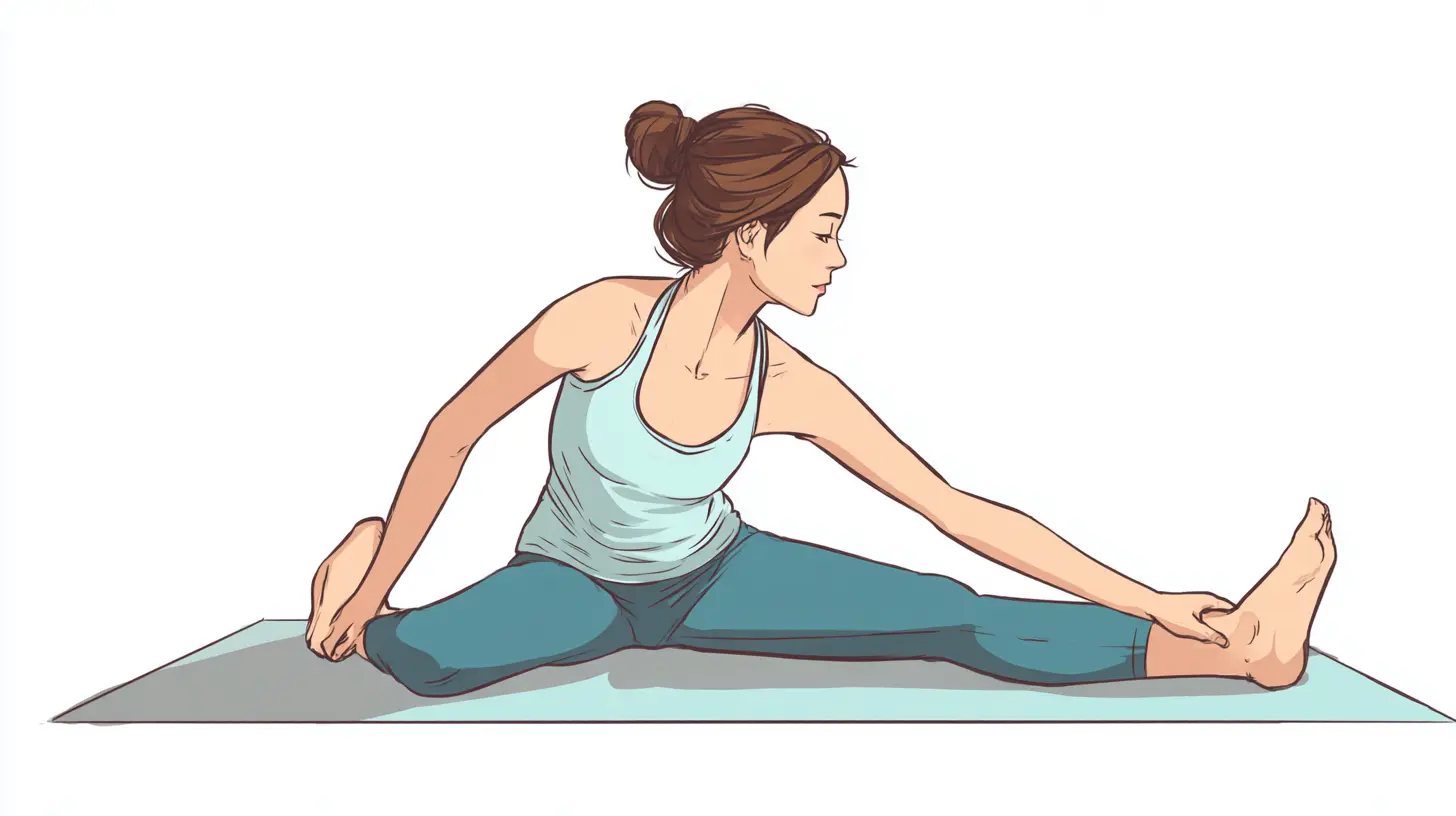
The Different Types of Stretching and When to Use Each
Not all stretching is the same, and using the wrong type at the wrong time is one of the most common beginner mistakes.Static Stretching
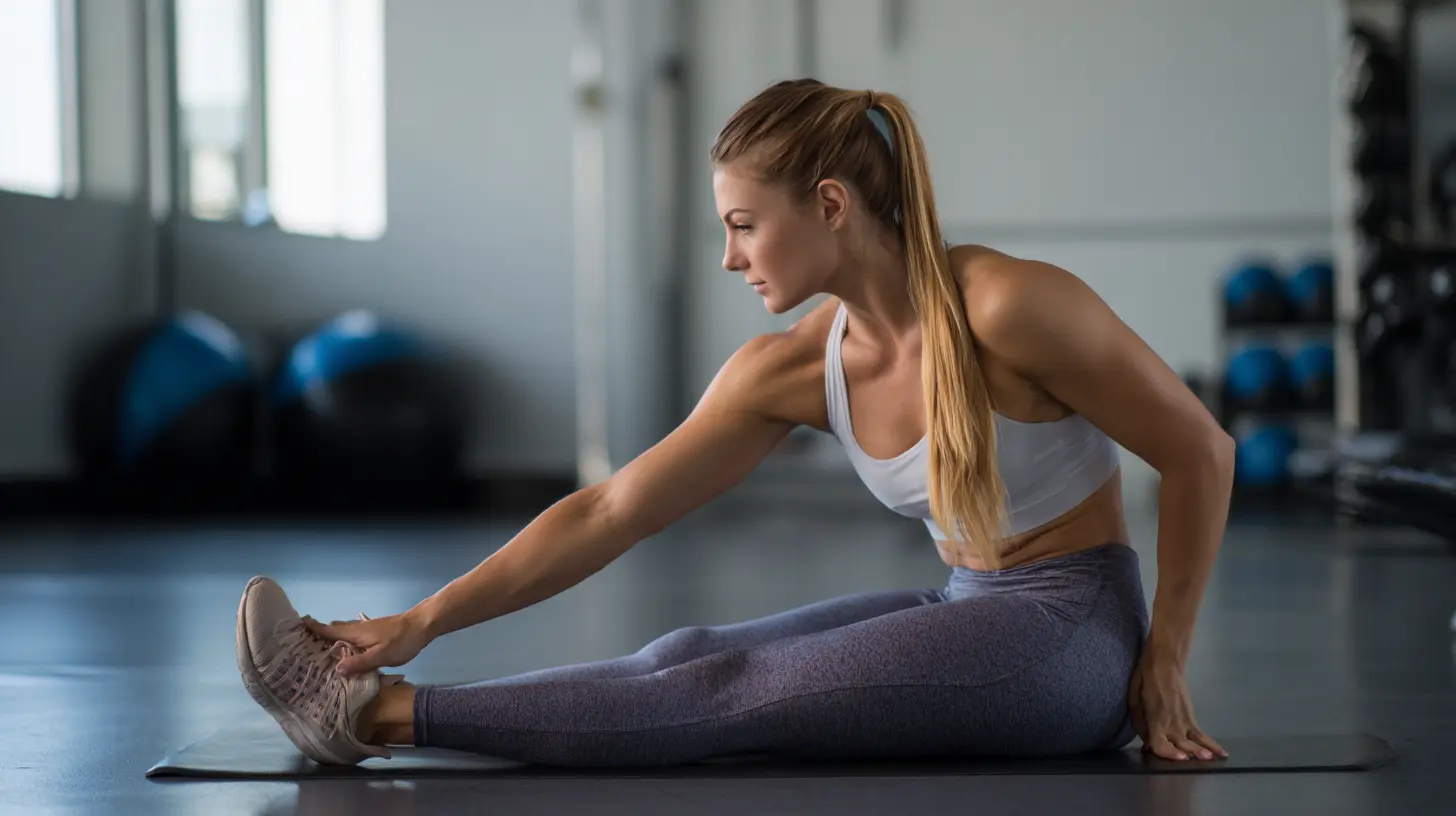
This is what most people picture. You move into a position that challenges your range and hold it, usually for 15 to 60 seconds, while relaxing into it.Static stretching is best used after activity or as a standalone session. It is effective for improving range of motion over time. It is also the safest option for beginners because it is easy to control and hard to do aggressively by accident.
The trade off: static stretching immediately before explosive activity, like sprinting or jumping, can temporarily reduce power output. If you are about to lift heavy or play a sport, save the long holds for afterward.
Dynamic Stretching
Dynamic stretching involves moving through a range of motion with control, without holding at the end. Leg swings, arm circles, walking lunges with a twist, and hip openers are common examples.This is the better choice before activity. It raises tissue temperature, increases blood flow, and rehearses the movement patterns you are about to use. It does not carry the same temporary performance cost as static stretching.
The trade off: dynamic stretching is less effective at producing lasting flexibility gains. It is a preparation tool, not a flexibility program.
Ballistic Stretching
This involves bouncing or forcing a stretch with momentum. It is generally not recommended for beginners. The rapid stretch triggers the muscle spindle reflex, which causes the muscle to contract against the movement. That increases injury risk and rarely produces the relaxation you want.Some advanced athletes use ballistic methods under supervision for specific goals. For a beginner, there is no good reason to start here.
PNF Stretching
Proprioceptive neuromuscular facilitation combines stretching with contraction. A common version is contract-relax: you stretch a muscle, then contract it against resistance for a few seconds, then relax and stretch further.PNF can produce faster range of motion gains than static stretching alone. The mechanism is neurological. The contraction activates the Golgi tendon organ, which promotes relaxation afterward.
The trade off: PNF usually requires a partner or careful self-administration, and it is more demanding. It is worth trying once you have a base of static stretching and understand how your body responds.
How to Stretch Without Wasting Your Time
Beginners often stretch randomly, hold for a few seconds, and move on. That produces little. A few principles make the difference.Warm Up First
Stretching cold tissue is less effective and less comfortable. You do not need a full workout. Five minutes of walking, light cycling, or dynamic movement is enough to raise tissue temperature and make stretching more productive.Hold Long Enough to Matter
For static stretching, 30 to 60 seconds per position is a reasonable target for most people. Shorter holds of 10 to 15 seconds can work for a maintenance routine, but if you are trying to improve range, give it time. The first 10 to 20 seconds are mostly the nervous system deciding whether to allow the position. The real relaxation often happens after that.Breathe Instead of Forcing
Holding your breath increases tension and works against the goal. Slow, steady breathing signals safety. If you cannot breathe comfortably, you are pushing too hard.Stretch to Sensation, Not Pain
A good stretch feels like a strong but tolerable pull. Sharp pain, numbness, tingling, or joint discomfort are stop signals. Discomfort at the muscle belly is normal. Discomfort inside a joint is not.Be Consistent Rather Than Intense
Three to five sessions per week of moderate stretching will do more than one aggressive session. The nervous system adapts through repetition, not through occasional heroics. Ten minutes most days beats an hour once a week.Target the Whole Chain
Tightness in one area often reflects restriction somewhere else. Hamstring tightness, for example, can be influenced by hip flexor tightness, pelvic position, and even ankle mobility. Stretching the hamstring alone may produce limited results if the surrounding system is not addressed.Common Mistakes Beginners Make
Stretching Before You Are Warm
Cold muscles and connective tissue are less pliable. Stretching cold increases the chance of strain and reduces the effectiveness of the session. Warm up first, even briefly.Bouncing
Bouncing triggers the protective reflex and makes the muscle tighten. It also increases the risk of micro tears. Hold steady instead.Holding Your Breath
Breath holding increases tension and reduces the relaxation response. Breathe slowly and let the exhale carry you slightly deeper.Pushing Through Pain
Pain is a signal, not a challenge. Stretching should never produce sharp or radiating pain. If it does, back off and reassess.Expecting Overnight Results
Flexibility gains take weeks, not days. Beginners often quit because progress feels slow. The early changes are often in how the stretch feels, not in how far you can go. That is still progress.Only Stretching What Feels Tight
The area that feels tight is not always the area that needs stretching. Sometimes it needs strengthening. A muscle that feels tight because it is working overtime to stabilize a weak joint will not benefit from being pulled longer. It may feel better briefly, then tighten again.Skipping Strength Work
Flexibility without strength is not useful. If you can reach a position but cannot control it, you do not own that range. Beginners should pair stretching with basic strengthening for the same areas, especially hips, shoulders, and core.
Stretching and Strength Training: A Necessary Partnership
This is where a lot of beginner advice falls short. Stretching alone produces range. Strength training produces control within that range. You need both.Consider the hamstring. If you stretch your hamstrings daily but never strengthen them, you may gain the ability to touch your toes. But if your hamstrings cannot handle load in that lengthened position, you have gained a party trick, not functional capacity. In fact, research on hamstring injury suggests that eccentric strength, the ability to control lengthening under load, is more protective than passive flexibility.
The practical takeaway: stretch to gain access to range, then strengthen to make that range usable. Romanian deadlifts, split squats, and controlled lunges are examples of exercises that build strength in lengthened positions. They complement stretching rather than replacing it.
This principle applies across the body. Shoulder flexibility without rotator cuff strength is fragile. Hip flexibility without glute strength is unstable. Ankle flexibility without calf strength is unreliable.
A Simple Beginner Routine You Can Actually Follow
You do not need a complicated program. You need a routine short enough to do consistently and complete enough to cover the major areas.Before Activity: Five Minute Dynamic Warm Up
- Leg swings, front to back and side to side, 10 each direction per leg- Arm circles, small to large, 10 each direction
- Walking lunges with a gentle twist, 8 per side
- Hip circles, 8 each direction
- Ankle rocks, 10 per side
After Activity or as a Standalone Session: Static Stretching
- Standing hamstring stretch or seated forward fold, 30 to 45 seconds per side- Hip flexor stretch in a half kneeling position, 30 to 45 seconds per side
- Figure four glute stretch, 30 to 45 seconds per side
- Chest stretch in a doorway, 30 seconds per side
- Child's pose for the back and hips, 45 to 60 seconds
- Neck and shoulder rolls, 30 seconds
Total time: about 10 to 12 minutes. Done three to five times per week, this is enough to maintain and gradually improve range of motion for most beginners.
How to Progress
Once this feels easy, add duration, add positions, or move into PNF style contract-relax work. You can also add targeted stretches for areas that feel restricted. But do not rush. The routine above is deliberately simple because consistency matters more than sophistication.
When Stretching Is Not the Answer
Stretching is not a universal solution, and recommending it for everything is one of the most common errors in fitness advice.Hypermobility
If your joints already move beyond a normal range, stretching further is not helpful. People with hypermobility often feel tight because their muscles are working hard to stabilize loose joints. The solution is strength and control, not more length. Stretching can worsen the problem by increasing instability.Acute Injury
Stretching a freshly injured muscle, tendon, or ligament can delay healing and worsen damage. In the early phase after an injury, protection and appropriate loading matter more than stretching. Follow medical guidance.Nerve Related Tightness
Sometimes the sensation of tightness comes from nerve tension rather than muscle tension. This can feel like a deep pull, tingling, or burning that travels. Stretching aggressively in these cases can irritate the nerve further. Nerve gliding exercises, done gently and under guidance, are often more appropriate.Strength Deficits
If a muscle feels tight because it is weak and overworked, stretching provides temporary relief at best. Strengthening the area and addressing the underlying imbalance is the real fix.The general principle: stretching addresses range of motion limitations. If the limitation is not a range problem, stretching is the wrong tool.
How Long Before You See Results
Beginners often ask this, and the honest answer is that it depends on what you mean by results.Changes in how a stretch feels can happen in the first session. You may notice that a position that felt restrictive on Monday feels more accessible by Friday. This is largely neurological and it is real progress.
Measurable changes in range of motion typically take several weeks of consistent practice. Studies on static stretching generally show meaningful gains after four to six weeks of regular sessions, with sessions most days of the week.
Long term changes, the kind that hold even when you are not stretching regularly, take longer. And they fade if you stop. Flexibility is a use it or lose it quality. If you stop stretching for a month, you will likely lose some of what you gained. This is not a reason to avoid it. It is a reason to build a routine you can sustain.
Making It Stick
The biggest obstacle for beginners is not technique. It is consistency. Here are practical ways to make stretching part of your life rather than a chore you abandon.Attach it to something you already do. Stretch while watching television, after your workout, or before bed. Pairing a new habit with an existing one is one of the most reliable ways to make it stick.
Keep it short. A ten minute routine you actually do beats a thirty minute routine you avoid. Start smaller than you think you need to.
Track it loosely. A simple checkmark on a calendar is enough. Seeing a streak builds momentum.
Focus on how it feels, not just how far you go. The goal is not to touch your toes. The goal is to move well, feel better, and stay capable as you age. That framing makes the habit easier to keep.
The Bottom Line
Stretching for beginners is not about achieving extreme flexibility. It is about maintaining the range of motion you need for everyday life, reducing unnecessary tension, and building awareness of how your body moves. It works by training your nervous system, not by pulling tissue longer. It pairs with strength training rather than replacing it. And it delivers results only when it is consistent and appropriately dosed.If you take one thing from this article, let it be this: stretch to feel better and move better, not to punish yourself into a position. Warm up first, breathe, stay consistent, and pair it with strength. That approach will serve you far better than any aggressive routine you abandon in two weeks.
all images in this post were generated using AI tools
Category:
Fitness For BeginnersAuthor:

Madeline Howard