Managing Screen Time to Protect Your Sleep
13 September 2026
Sleep is not a switch you flip when you close your laptop. It is a biological process that begins hours before your head touches the pillow. The light you absorb, the mental arousal you generate, and the timing of your last interactions with screens all shape how quickly you fall asleep, how deeply you rest, and how you feel the next morning. This article examines the real mechanisms behind screen-related sleep disruption, separates the well-supported concerns from the exaggerated ones, and offers practical strategies that respect both your health and the realities of modern life.
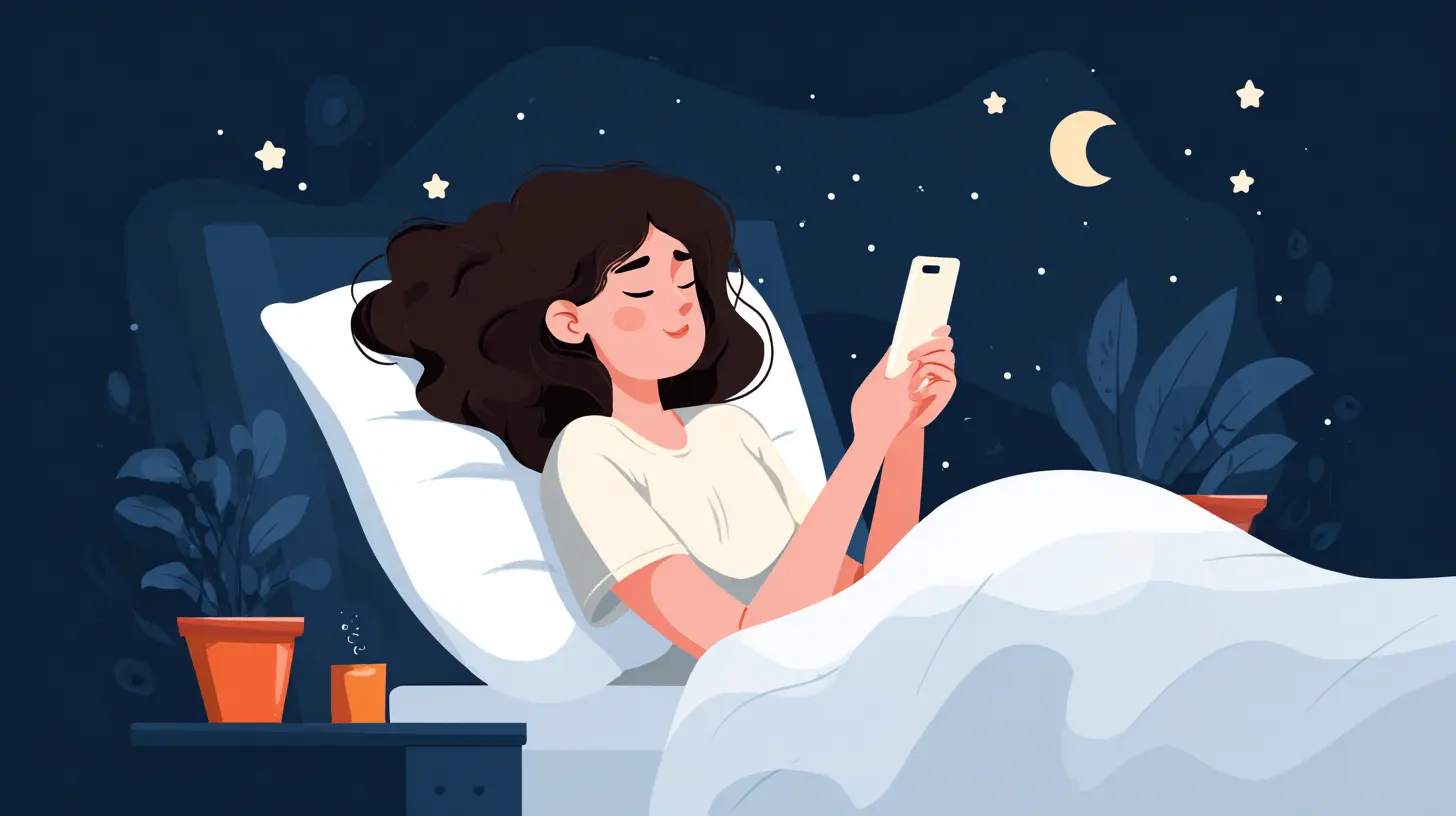
Why Screens Affect Sleep at a Biological Level
To manage screen time effectively, you need to understand what screens actually do to your body. Two primary mechanisms are at work, and they operate independently of each other.The Light Factor
Your brain relies on light exposure to calibrate the circadian rhythm, the internal clock that governs when you feel alert and when you feel sleepy. Specialized cells in the retina, called intrinsically photosensitive retinal ganglion cells, are particularly sensitive to short-wavelength light in the blue portion of the spectrum. When these cells detect blue light, especially in the evening, they send signals to the suprachiasmatic nucleus, which then suppresses melatonin production.Melatonin is not a sleep hormone in the sense of knocking you out. It is better understood as a timing signal. It tells your body that night has arrived and that biological processes associated with rest should begin. When melatonin release is delayed by evening light exposure, your internal clock shifts later. You may not feel sleepy at your usual bedtime, and even if you force yourself to lie down, sleep onset can take longer.
The intensity and duration of light matter. A bright overhead light or a close-range tablet screen delivers far more light to the retina than a dimly lit e-reader held at arm's length. Distance reduces the effective dose dramatically, which is why watching television across a room tends to have less impact than holding a phone inches from your face.
The Arousal Factor
The second mechanism is psychological and neurological arousal. Screens deliver content, and content engages the mind. A work email that triggers anxiety, a social media thread that provokes outrage, a video game that demands rapid reaction, or a cliffhanger episode that leaves you wanting more, all of these activate the sympathetic nervous system. Your heart rate may rise, stress hormones may increase, and your brain enters a state of alertness that is fundamentally incompatible with falling asleep.This arousal effect is often more powerful than the light effect, yet it receives less attention. Someone can use a dimmed screen with a blue light filter and still struggle to sleep because the content itself is keeping their mind racing. Conversely, a person might read a calm novel on a backlit device and fall asleep without difficulty, even though the light exposure is not ideal.
Understanding both mechanisms is essential because it prevents the common mistake of focusing exclusively on blue light glasses or night mode settings while ignoring the content and emotional state that screens create.
How Much Screen Time Is Actually Problematic
There is no universal threshold. The impact of screen time on sleep depends on timing, content, device type, individual sensitivity, and what the screen time replaces.Timing Matters More Than Total Hours
An hour of screen use at noon has almost no effect on your sleep. The same hour at 11 p.m. can be significantly disruptive. The closer screen use occurs to your intended bedtime, the more likely it is to interfere with sleep onset and quality. This is because both light exposure and arousal have their strongest effects in the window when your body is preparing for sleep.What Screen Time Replaces
If screen time replaces physical activity, face-to-face social interaction, or time outdoors during the day, it can indirectly harm sleep by reducing the factors that promote good rest. If it replaces lying awake in bed worrying, it might actually be neutral or even helpful for some people. Context determines impact.Individual Variability
Some people are highly sensitive to evening light and mentally stimulating content. Others seem relatively unaffected. Genetics, age, chronotype, and existing sleep disorders all play a role. Adolescents and young adults tend to have later natural sleep timing, which makes them more vulnerable to the delaying effects of evening screens. Older adults may have different sensitivities and often benefit from bright light earlier in the day rather than avoidance at night.Rather than asking "How many hours is too many," a more useful question is "When, what, and instead of what."
The Most Common Mistakes People Make
Many well-intentioned efforts to reduce screen-related sleep problems fail because they target the wrong variable or apply solutions inconsistently. Here are the mistakes I see most often.Relying Only on Blue Light Filters
Blue light filtering modes reduce short-wavelength light, and they can help. However, they do not eliminate the arousal effect of content, and they do not address the fact that any bright light at night can suppress melatonin to some degree. Using night mode while scrolling through stressful news or engaging in heated online debates is like wearing a seatbelt while driving recklessly. The filter helps at the margins but does not solve the core problem.Using Screens in Bed
The bed should be a strong cue for sleep. When you regularly use screens in bed, you weaken that association. Your brain learns that bed is a place for stimulation, and this can contribute to conditioned insomnia over time. Even if you feel fine now, the habit can become problematic during periods of stress when sleep is already fragile.Cutting Screen Time Abruptly Without a Replacement
If you simply remove your evening screen routine without substituting something else, you may find yourself lying in bed with nothing to do but ruminate. This can make sleep worse, not better. The goal is not deprivation but replacement with activities that support the transition to sleep.Ignoring Morning Light
Evening light gets most of the attention, but morning light exposure is equally important. Bright light in the morning helps anchor your circadian rhythm and makes it easier to fall asleep at the right time at night. If you stay in dim indoor lighting all morning and then try to fix your sleep by avoiding screens at night, you are working with only half the equation.Assuming All Screen Activities Are Equivalent
Reading a calm article on an e-ink device is not the same as playing a competitive online game. Watching a familiar, low-stakes television show is not the same as answering work emails. Treating all screen time as uniformly harmful leads to overly rigid rules that are hard to sustain and may not address the actual problem.
Practical Strategies That Work
The strategies below are organized from most impactful to least impactful. Start with the ones that address the biggest mechanisms first.1. Set a Screen Curfew
A screen curfew means turning off or putting away devices at a set time before bed. The ideal window varies by person, but a common recommendation is 60 to 90 minutes before your target sleep time. This allows melatonin to rise naturally and gives your nervous system time to downshift.Why it works: It addresses both light and arousal simultaneously. It also creates a predictable transition period that signals to your brain that sleep is approaching.
When it might not be necessary: If you consistently fall asleep within 15 minutes of getting into bed and wake up refreshed, your current routine may be fine. Rigid rules can create anxiety about sleep, which is counterproductive.
What to consider: The curfew does not have to mean total darkness or complete inactivity. It means no screens. Reading a paper book, stretching, journaling, or talking with a partner are all compatible with the goal.
2. Replace Stimulating Content With Calming Content
If you are not ready to give up screens entirely before bed, change what you consume. Avoid news, social media, work, and anything designed to provoke strong emotion. Choose content that is predictable, low-stakes, and easy to disengage from.Examples: A familiar comfort show you have seen many times, a documentary about nature with calm narration, or a slow-paced video that does not require interaction.
Why it works: It reduces the arousal effect while still allowing some screen use. The key is that the content should not trigger the urge to respond, react, or keep watching.
Trade-offs: Even calming content emits light and can delay sleep if watched too close to bedtime. This strategy is best used as a stepping stone rather than a permanent solution for people who are sensitive.
3. Reduce Light Intensity and Distance
If you must use a screen in the evening, lower the brightness to the minimum comfortable level and increase the distance between your eyes and the screen. A phone held 10 inches away delivers much more light to the retina than a laptop or television across the room.Why it works: Light intensity decreases with distance. Even a modest increase in distance can meaningfully reduce the melatonin-suppressing effect.
Practical tip: Enable night mode or a warm color temperature setting in addition to lowering brightness. These changes are not a complete solution, but they stack with other strategies.
What to consider: Very low brightness can cause eye strain if the surrounding environment is too bright. Match your screen brightness to the ambient light in the room for comfort.
4. Create a Charging Station Outside the Bedroom
This is one of the most effective structural changes you can make. Charge your phone and other devices in a different room overnight. This removes the temptation to check notifications, eliminates the possibility of late-night scrolling, and strengthens the mental association between the bedroom and sleep.Why it works: It changes the default. Instead of relying on willpower every night, you make the desired behavior the path of least resistance. You also eliminate the risk of notifications waking you or fragmenting your sleep.
Common objection: "I use my phone as an alarm." A basic alarm clock is inexpensive and solves this problem. If you truly need your phone for emergencies, enable do not disturb mode and place it across the room so you have to get up to check it.
Trade-offs: Some people feel anxious without their phone nearby. This anxiety usually fades within a week or two. If it does not, consider whether the anxiety itself is a sign that the habit has become problematic.
5. Get Bright Light in the Morning
This is the counterpart to evening screen management. Exposure to bright light within an hour of waking helps set your circadian rhythm for the day. It makes you feel more alert in the morning and makes it easier to fall asleep at night.How to do it: Spend 10 to 30 minutes outdoors in natural light, even on cloudy days. If that is not possible, use a light therapy lamp designed for circadian support.
Why it works: Morning light advances your circadian clock, meaning it shifts your natural sleep timing earlier. This creates more separation between your evening screen use and your biological bedtime, reducing the conflict between the two.
What to consider: The effect depends on consistency. Sporadic morning light exposure is less helpful than a daily routine.
6. Establish a Wind-Down Routine
A wind-down routine is a sequence of low-stimulation activities you perform in the same order each night. It might include dimming the lights, taking a warm shower, reading, light stretching, or listening to calm music.Why it works: Routines create conditional cues. After enough repetition, the routine itself begins to trigger drowsiness. This is classical conditioning applied to sleep.
What to include: Activities that are quiet, enjoyable, and not dependent on screens. The specific activities matter less than the consistency and the absence of stimulation.
What to avoid: Checking email, paying bills, having difficult conversations, or anything that requires problem-solving or emotional labor.
Special Considerations for Different Groups
Adolescents and Teenagers
Teenagers have a biologically delayed sleep phase. They naturally want to stay up later and sleep later. Evening screen use compounds this tendency. For adolescents, the most effective strategies are often structural: charging phones outside the bedroom, setting parental controls if appropriate, and modeling good behavior as a household.It is also worth distinguishing between screen time that displaces sleep and screen time that occurs because the teenager cannot sleep. In the latter case, the screen is a symptom rather than a cause, and addressing the underlying sleep issue is more important than confiscating devices.
Shift Workers
Shift workers face unique challenges because their sleep schedule is already misaligned with natural light cycles. For them, managing light exposure becomes even more critical. Bright light during the commute home after a night shift can make it harder to fall asleep during the day. Sunglasses and blackout curtains can help. Screen use before daytime sleep should be minimized or managed with the same strategies described above.People With Insomnia
For people with chronic insomnia, screen use in bed can become a conditioned trigger for wakefulness. Cognitive behavioral therapy for insomnia often includes instructions to leave the bed if you cannot sleep and to avoid screens in bed entirely. If you have insomnia, the strategies in this article are supportive but not a substitute for professional treatment.
What the Evidence Does and Does Not Support
It is important to be honest about what we know and what remains uncertain.We know with reasonable confidence that evening light exposure can suppress melatonin and delay circadian timing. We know that mental arousal interferes with sleep onset. We know that screen use before bed is associated with shorter sleep duration and poorer sleep quality in many studies.
What is less clear is the precise magnitude of these effects for any given individual, the long-term consequences of chronic evening screen use, and whether the associations observed in research are fully causal or partly explained by other factors. People who use screens late at night may also have higher stress levels, less consistent routines, or other characteristics that independently affect sleep.
This uncertainty does not mean you should ignore the issue. It means you should approach it experimentally. Try changes, observe your sleep, and keep what works. Do not assume that a single study or a popular claim applies universally.
A Balanced Approach
The goal is not to demonize screens or to create an unrealistic set of rules you cannot follow. The goal is to use screens in a way that respects your need for sleep.A balanced approach might look like this:
- Use screens freely during the day, but take breaks and get outside when you can.
- Reduce stimulating content and bright light in the two hours before bed.
- Put devices away for the last 30 to 60 minutes before sleep.
- Keep phones out of the bedroom overnight.
- Get bright light in the morning to anchor your rhythm.
- Adjust based on how you feel and how you sleep.
Some nights you will follow this perfectly. Other nights you will not. That is fine. Consistency over weeks matters more than perfection on any single night.
When to Seek Professional Help
If you have tried these strategies for several weeks and still struggle with sleep, consider talking to a healthcare provider. Persistent sleep problems can have causes that screen management alone cannot address, including sleep apnea, restless legs syndrome, thyroid issues, anxiety disorders, and depression. A professional evaluation can identify underlying conditions and recommend appropriate treatment.Similarly, if you find that you cannot reduce your screen use despite wanting to, or if your screen use is causing significant distress or impairment in your life, that is worth discussing with a mental health professional. Problematic screen use can be a coping mechanism for other issues, and addressing the root cause is more effective than fighting the symptom.
Final Thoughts
Managing screen time to protect your sleep is not about willpower or deprivation. It is about understanding the mechanisms at play and designing your environment and routines to work with your biology rather than against it. Light and arousal are the two levers you can adjust. Timing, content, distance, and replacement activities are the tools you can use.Start with the changes that address the biggest factors: a screen curfew, a charging station outside the bedroom, and morning light exposure. Add other strategies as needed. Pay attention to how you feel. Adjust as you go.
Sleep is not a luxury or a sign of laziness. It is a foundational pillar of physical health, mental health, and cognitive performance. Protecting it is one of the most valuable investments you can make in yourself. The screens will still be there in the morning.
all images in this post were generated using AI tools
Category:
Sleep HygieneAuthor:

Madeline Howard
Discussion
rate this article
1 comments
Ethan Gray
If my phone had a bedtime, it would be 8 PM. Screen time steals sleep like a sneaky raccoon. Let's reclaim our Z's and keep the raccoons at bay!
September 15, 2026 at 2:31 PM