How Yoga Can Transform Your Mental Health by 2026
17 April 2026
Let’s be honest for a second. How are you really feeling? Not the “I’m fine” you tell the barista, but the deep-down, in-your-bones truth. If you’re like millions of people, the answer might involve words like “wired,” “overwhelmed,” “disconnected,” or just plain “tired.” Our minds are running a marathon on a hamster wheel, fueled by notifications and doom-scrolling, and it’s exhausting. We’re treating our brains like machines, forgetting they are living, breathing, feeling parts of our whole being.
But what if I told you that the key to unlocking a calmer, clearer, and more resilient mind by 2026 isn’t found in a new app or a magic pill, but in an ancient practice you can unroll onto a mat? I’m talking about yoga. And no, this isn’t just about touching your toes. This is about a profound, evidence-backed mental revolution that’s already underway. By 2026, yoga won’t just be a wellness trend; it will be a fundamental tool for mental health transformation. Let’s dive into how.

The Modern Mind: A Firework in a Thunderstorm
First, we need to understand what we’re up against. Our mental landscape is chaotic. We’re bombarded with information, our attention is fractured, and our nervous systems are stuck in a low-grade “fight-or-flight” mode. It’s like having a firework display going off inside your head during a thunderstorm—lots of noise and light, but no peace, no clarity. This constant state of alert creates anxiety, fuels depression, and fragments our sense of self.Traditional mental health approaches are crucial, but they often focus solely on the mind—the thoughts, the patterns, the stories. Yoga introduces a radical idea: the mind and body are not separate entities. You cannot calm a turbulent mind while ignoring a tense, hunched body holding the stress of a lifetime. The body keeps the score, as they say. Yoga is the practice of settling that score.
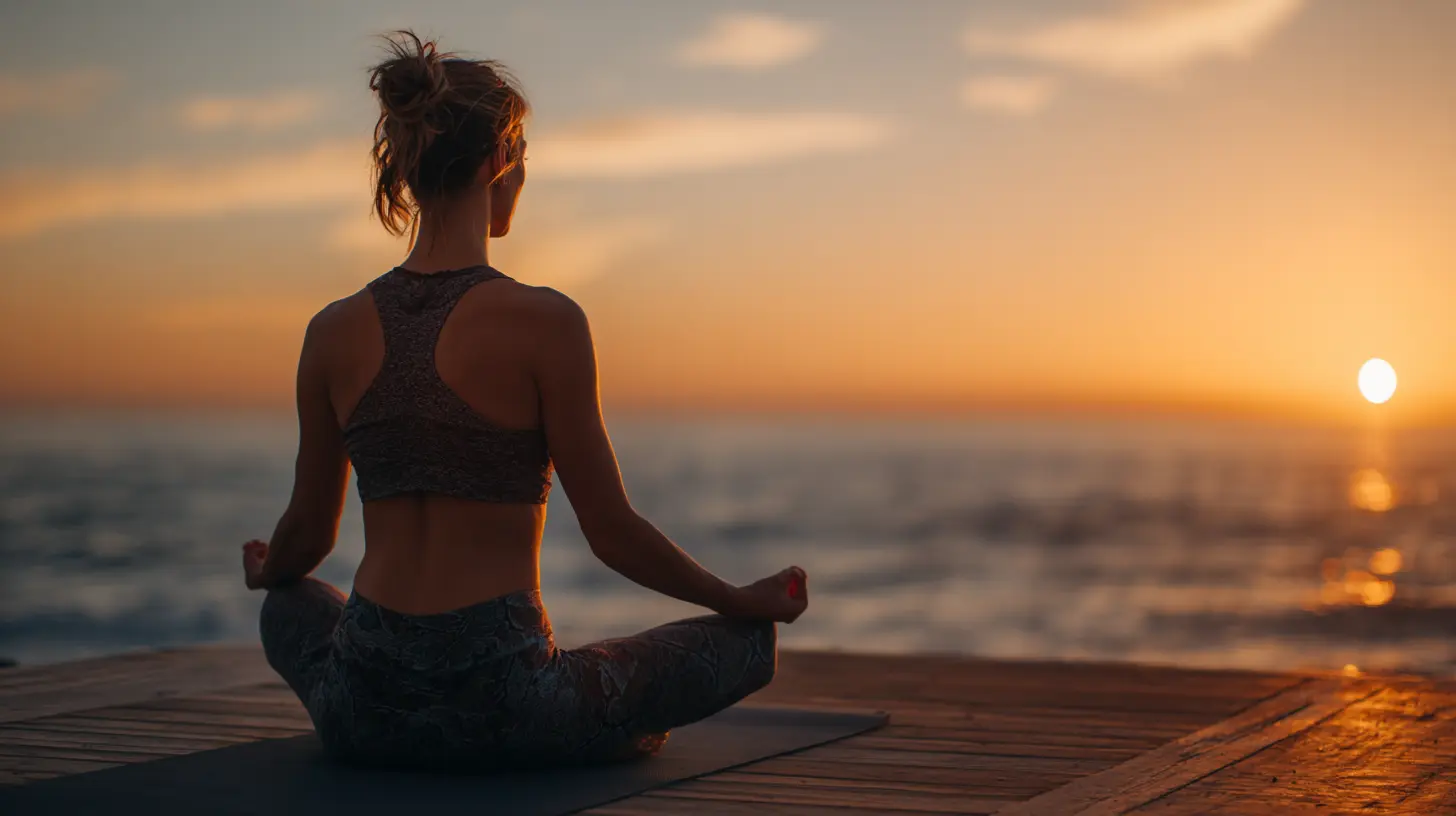
Yoga: The Operating System Update Your Brain Has Been Waiting For
Think of your current stress response like an old computer operating system—it’s slow, glitchy, and crashes under pressure. Yoga is the comprehensive system update. It doesn’t just teach you to "think positive"; it rewires your hardware and your software from the cellular level up.Here’s the beautiful science of it: when you step onto your mat, you’re initiating a cascade of neurological and biochemical changes. Controlled breathing (pranayama) sends a direct memo to your vagus nerve, your body’s main nerve for relaxation, telling your frantic amygdala (the brain’s alarm bell) to stand down. Physical postures (asanas) release the physical armor of stress—the tight shoulders, the clenched jaw—freeing trapped emotion and increasing feel-good neurotransmitters like GABA, serotonin, and dopamine.
But it’s the third pillar, mindfulness and meditation (dhyana), that truly changes the game. This is where you move from being a passenger in your chaotic mind to becoming the observer in the driver’s seat. You learn to watch your thoughts like clouds passing in the sky, without getting swept away by the storm. This single skill—non-reactive awareness—is perhaps the most powerful mental health tool you can develop by 2026.

The 2026 Transformation: A Vision of Integrated Wellbeing
So, what does this transformation actually look like as we move toward 2026? It’s not about achieving some zen-like state of perpetual bliss. It’s about building a robust, adaptable, and compassionate inner ecosystem.1. Emotional Resilience Becomes Your Default
Imagine facing a work crisis or a personal setback not with a spiral of panic, but with a grounded sense of "I can handle this." Yoga cultivates this by teaching you to stay present with discomfort—both physical on the mat and emotional off it. You learn to breathe through the shaky hold of a difficult pose, and that same skill translates to breathing through the anxiety of a difficult conversation. By 2026, your resilience won’t be a wall you build; it will be the flexible, rooted strength of a bamboo tree, bending without breaking.2. The End of the War With Your Own Thoughts
For many, the mind is a hostile place, a constant critic. Yoga fosters self-compassion (ahimsa). As you learn to gently guide your body without force, you begin to treat your thoughts with the same kindness. That critical inner voice starts to sound less like a dictator and more like a worried friend you can reassure. The transformation here is moving from self-judgment to self-witnessing. What would your life be like if you were your own best ally?3. Presence: The Most Precious Currency of 2026
In a world screaming for our attention, the ability to be truly present will be the ultimate luxury. Yoga is a training ground for presence. It’s the practice of feeling the sole of your foot on the floor, the rhythm of your inhale, the stretch along your spine—right here, right now. This isn’t just "in the moment" stuff; it’s a rewiring of your brain’s default mode network, pulling you out of the regrets of the past and the worries of the future. By 2026, a focused, present mind will be your superpower.4. The Body-Mind Connection: Your Built-In Biofeedback Machine
You’ll become exquisitely tuned to your own internal signals. That tightness in your gut will no longer be a mysterious ache; it will be a message saying, "You’re anxious about that deadline." A stiff upper back will whisper, "You’re carrying too much responsibility." Yoga turns your body into a conversation, not a command. This somatic awareness allows you to address stress and emotion as they arise, preventing them from building into a mental health crisis.
Your Roadmap: Starting the Transformation Today
This all sounds great for 2026, but the journey starts with a single breath, today. You don’t need to be flexible, spiritual, or able to stand on your head.* Forget the Instagram Pose. Start with five minutes of conscious breathing. Sit, close your eyes, and just follow the inhale and exhale. This is yoga.
* Find Your "Why." Are you doing it to quiet anxiety? To find focus? To sleep? Let that intention be your guide, not the perfect pose.
* Consistency Over Intensity. A 10-minute gentle practice every day is infinitely more transformative than a grueling 90-minute session once a month. It’s about drip-feeding your nervous system with calm.
* Explore Styles. A fiery Vinyasa flow might calm a restless mind, while a deep Yin practice might unlock stored emotion for someone feeling numb. Restorative yoga is a balm for anxiety. It’s a personal experiment.
The Invitation: Your Mat Awaits
By 2026, the conversation around mental health will have deepened. It will be less about just managing illness and more about cultivating holistic wellbeing. Yoga stands at the center of this shift, not as a cure-all, but as a foundational practice of coming home to yourself.This transformation is not a distant promise; it’s an available reality. Your mat is a laboratory for your inner world. It’s where you practice patience, build strength, make peace with limitation, and, most importantly, remember the quiet, steady presence that exists beneath the chaos of your thoughts.
The question isn’t whether you have time for yoga. The question is, can you afford to wait any longer to reclaim the peace and power of your own mind? The path to 2026 begins with your next breath. Roll out your mat, and let’s begin.
all images in this post were generated using AI tools
Category:
Yoga BenefitsAuthor:

Madeline Howard
Discussion
rate this article
2 comments
Kova Stone
Yoga's holistic approach fosters resilience and clarity.
May 3, 2026 at 2:40 AM
Madeline Howard
Absolutely, yoga offers powerful tools for building resilience and enhancing mental clarity. Its holistic nature can be a game changer for mental health.
Celine Curry
Forget roller coasters! Yoga's twists and turns can take your mind on the wildest ride—no nausea included! By 2026, you'll be zen-sationally balanced and blissfully unbothered!
April 26, 2026 at 4:27 PM
Madeline Howard
Absolutely! Yoga really does offer a unique journey for the mind, leading to balance and calmness. Excited to see where this practice takes us by 2026!