How Yoga Boosts Self-Esteem and Inner Confidence
30 September 2026
Self-esteem is not a personality trait you are born with or without. It is a living relationship you have with yourself, shaped by what you tell yourself, how you carry your body, and what you believe you are capable of handling. That is exactly why yoga, when practiced with intention, can change it. Not because it promises instant transformation, but because it quietly rewires the way you inhabit your own skin.
I have spent years watching students walk into a studio with their shoulders rolled forward and their eyes on the floor, and walk out months later standing differently. Not because they mastered a handstand. Because something shifted inside the way they meet themselves. This article explains how that shift happens, why it holds up under pressure, and what you need to know before you decide whether yoga is the right tool for your own confidence work.

Why Self-Esteem Is More Physical Than Most People Realize
We tend to treat self-esteem as a purely mental phenomenon. You either believe in yourself or you do not. But confidence has a body. Think about the last time you felt genuinely sure of yourself. Your posture was likely open, your breathing was steady, your gaze was level. Now recall a moment of shame or self-doubt. The chin dropped. The chest caved. The breath got shallow and high in the throat.This is not coincidence. The body and the sense of self are in constant conversation. Psychologists sometimes describe this as embodied cognition: the idea that your thoughts are not generated by a brain floating in a jar, but by a whole organism interacting with the world. When you change how you hold your body, you change the data your nervous system sends upward.
Yoga works on confidence from this direction first. Before you believe a single positive affirmation, you practice standing in a way that feels grounded. You practice breathing when your muscles are shaking. You practice staying when your instinct is to flee. Over time, these physical experiences become evidence. And self-esteem, at its core, is built on evidence.

The Difference Between Self-Esteem and Confidence
People use these terms interchangeably, but they are not the same. Confidence is situational. You can be confident giving a presentation and terrified of small talk at a party. Self-esteem is broader. It is your overall sense of worth and your belief that you deserve good things, even when you fail.Yoga addresses both, but through different mechanisms. Confidence grows from competence: you learn to hold a pose, and that competence transfers to other challenges. Self-esteem grows from self-acceptance: you learn to be with yourself in discomfort without abandoning yourself. A good practice cultivates both, but it is worth knowing which one you are actually chasing.
If you only chase competence, you risk building a fragile confidence that collapses the moment you meet someone better than you. If you only chase acceptance, you might avoid the healthy challenge that builds real skill. The sweet spot is doing hard things while staying kind to yourself. Yoga, done well, is a laboratory for exactly that.

How Yoga Rewires the Stress Response That Undermines Confidence
Chronic stress is one of the quietest destroyers of self-esteem. When your nervous system is stuck in a low-grade threat state, everything feels harder. You second-guess yourself. You read neutral comments as criticism. You avoid risks because your body is telling you the world is dangerous.Yoga's most underrated contribution to confidence is its effect on the autonomic nervous system. Slow, controlled breathing with extended exhales activates the parasympathetic branch, the part responsible for rest and recovery. This is not mystical. It is physiology. When your body learns, through repetition, that it can move from activation back to calm, you develop what researchers sometimes call vagal tone, a marker of stress resilience.
Why does this matter for self-esteem? Because confidence is largely the ability to stay regulated in uncertain situations. The person who can feel their heart pounding before a difficult conversation and still speak clearly is not fearless. They are regulated. Yoga trains that capacity on the mat, in a low-stakes environment, so it is available when the stakes are high.
A Concrete Example
Consider a student who freezes during conflict. On the mat, she learns to hold a challenging lunge for five breaths while her legs burn. She is not in danger. She is uncomfortable. She stays anyway. The next time her partner criticizes her, she notices the same burning sensation in her chest, recognizes it as discomfort rather than catastrophe, and responds instead of shutting down. That is confidence built from the inside out.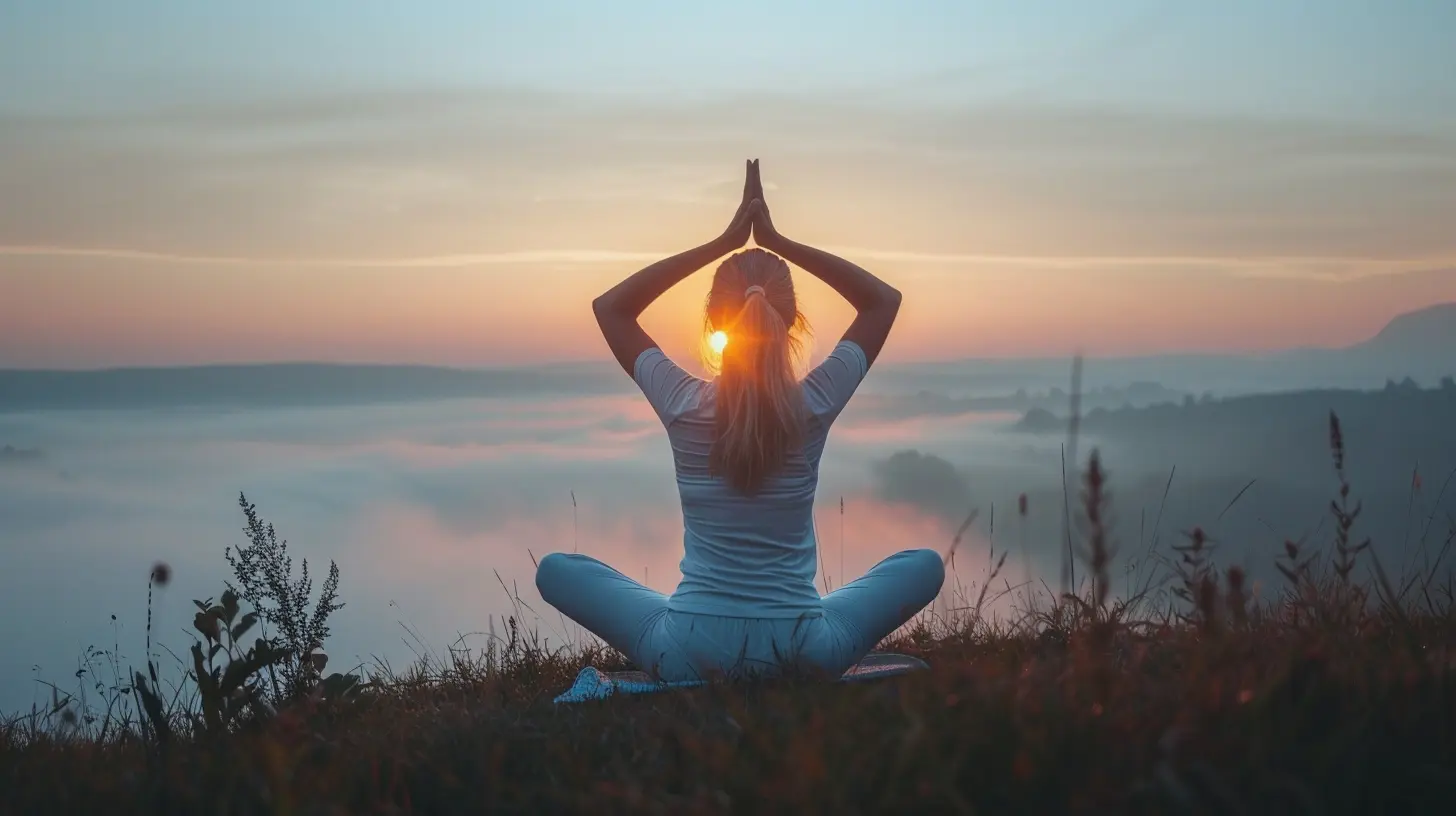
The Role of Interoception in Building Inner Confidence
Interoception is your ability to sense what is happening inside your body: your heartbeat, your breath, the tension in your jaw. Many people with low self-esteem have poor interoception. They are disconnected from their own signals, which makes it hard to know what they actually want or need.Yoga is essentially interoception training. Every instruction to notice your breath or feel your feet is a rep in self-awareness. This matters because confidence requires knowing your own mind. If you cannot tell the difference between genuine excitement and anxiety, you will make decisions based on confusion. If you cannot feel when you are depleted, you will keep pushing until you burn out, and burnout erodes self-worth fast.
There is a trade-off here. Some styles of yoga, particularly fast vinyasa or hot yoga, can overwhelm interoception for beginners. The sensations are so intense that the student tunes out rather than tunes in. If your goal is confidence through self-awareness, slower practices like hatha, yin, or restorative yoga often serve you better in the early stages. You can always add intensity later.
Why Comparison Is the Enemy and How Yoga Handles It
Walk into any yoga class and you will see people who are more flexible, stronger, or more graceful than you. This is a real risk. If you spend the class measuring yourself against them, yoga becomes another arena for inadequacy.But yoga offers a built-in antidote that few other physical disciplines do: the instruction to stay on your own mat. This is not just etiquette. It is a philosophical stance. In yoga, the pose is not the goal. The quality of your attention is the goal. Two people in the same shape are having completely different experiences, and both are valid.
This reframing is powerful for self-esteem because it removes the external scoreboard. You are not competing. You are practicing. The moment you internalize that, you stop needing to be the best in the room to feel worthy. That is a transferable skill. It applies to your career, your relationships, and your creative work.
That said, comparison is not always destructive. Sometimes seeing someone do something you did not know was possible expands your sense of what you can attempt. The key is whether the comparison inspires you or shames you. If it shames you, you need to recalibrate. If it inspires you, use it.
The Myth of the Perfect Pose
A common misconception is that yoga builds confidence by making you good at yoga. This gets the causality backwards. The confidence comes from the process, not the achievement. In fact, chasing the perfect pose can actively harm self-esteem, because there is always another pose you cannot do.I have seen students injure themselves trying to force a shape their body was not ready for, all because they wanted to feel capable. The injury then sets them back, and their confidence takes a hit. This is the trap of treating yoga as performance.
The healthier approach is to define success as showing up and paying attention. Did you breathe through the hard part? Did you notice when you were forcing? Did you back off when you needed to? These are the wins that build durable self-esteem, because they are available to you every single day, regardless of your flexibility or strength.
Practical Ways to Use Yoga for Confidence
Knowing the theory is one thing. Putting it into practice is another. Here are concrete strategies that work, along with the reasoning behind each.1. Build a Consistent, Short Practice
Ten minutes a day beats ninety minutes once a week. Consistency creates the repetition your nervous system needs to change. It also builds a quiet identity: I am someone who shows up for myself. That identity is the bedrock of self-esteem.2. Prioritize Standing Poses Early
Poses like mountain, warrior two, and triangle teach you to take up space. They require you to root down and rise up simultaneously. For people who habitually shrink, these poses are a physical rehearsal for being seen. Practice them with attention to your breath and your gaze, not just your alignment.3. Use Breath as a Confidence Anchor
Before any situation that intimidates you, take five slow breaths with exhales longer than inhales. This is not a magic trick. It is a way to signal safety to your nervous system so you can act from choice rather than fear. The more you practice this on the mat, the more automatic it becomes.4. Keep a Practice Journal
Write one sentence after each session. Not what you did, but how you felt and what you noticed. Over weeks, you will see patterns. You will see that the days you felt low, you still practiced. That record becomes proof of resilience, which is far more convincing than any affirmation.5. Choose Teachers Who Emphasize Process
The teacher matters enormously. A teacher who focuses on alignment, breath, and self-inquiry will build your confidence. A teacher who pushes you into advanced poses before you are ready, or who shames you for modifying, will undermine it. You are allowed to leave a class that does not serve you.
When Yoga Is Not the Right Tool
Yoga is powerful, but it is not a cure-all. If you are dealing with clinical depression, severe anxiety, or trauma, yoga can be a helpful complement to professional treatment, but it should not replace it. Some breathing practices can even trigger anxiety or dissociation in people with trauma histories. This is not a reason to avoid yoga forever. It is a reason to work with a trauma-informed teacher and to go slowly.There is also a risk of spiritual bypassing, using yoga to avoid difficult emotions rather than to meet them. If you find yourself using your practice to numb out or to feel superior to others, something has gone sideways. Real confidence includes the humility to know what you do not know and the courage to ask for help.
How Long Does It Take to See Change
This is the question everyone asks, and the honest answer is: it depends. Some people feel a shift in a single class, a sense of calm or groundedness they did not expect. But durable self-esteem changes over months, not days. The people who see the biggest shifts are the ones who practice regularly, reflect on their experience, and apply what they learn off the mat.Think of it like strength training. You do not get stronger in one session. You get stronger because your body adapts to repeated demand. Confidence works the same way. Each time you stay with yourself through discomfort, you lay down a little more evidence that you can handle hard things. That evidence accumulates.
Common Mistakes That Stall Progress
The first mistake is treating yoga as a performance. The second is skipping the breath. The third is practicing only when you feel good. The fourth is comparing yourself to others. The fifth is expecting yoga to fix everything without changing anything else in your life.The most subtle mistake is using yoga to earn self-worth rather than to practice self-acceptance. If your inner voice says you are only worthy when you practice, you have simply replaced one harsh standard with another. The goal is to practice because it nourishes you, not because you are trying to prove something.
Bringing It Off the Mat
The real test of yoga's effect on self-esteem is not how you feel in savasana. It is how you feel when you are late for a meeting, when someone dismisses your idea, when you look in the mirror and do not like what you see. The mat is a training ground. The world is where you play the game.Pay attention to the moments when you would normally shrink. Notice if there is a fraction more space. Notice if you can breathe before you react. Notice if you can speak up one second sooner than you used to. These small shifts are the real measure of progress, and they compound over time.
A Final Thought
Self-esteem is not something you find. It is something you build, one honest moment at a time. Yoga gives you a structured, repeatable way to have those moments. It asks you to show up, pay attention, and stay kind to yourself while you do hard things. Do that often enough, and you stop needing to convince yourself you are worthy. You simply know it.
all images in this post were generated using AI tools
Category:
Yoga BenefitsAuthor:

Madeline Howard