How to Make Over Your Bedroom for Optimal Sleep Hygiene
23 October 2026
Sleep is not a switch you flip. It is a biological process that responds to cues, and your bedroom is the single largest source of those cues. Most people treat the bedroom as a storage unit with a mattress in it: a place where laundry piles up, phones charge overnight, work laptops sit open, and the television murmurs until midnight. Then they wonder why they lie awake staring at the ceiling.
I have spent years studying how sleep environments shape rest, and the pattern is consistent. People who sleep well tend to have bedrooms that quietly support sleep without requiring willpower at 11 p.m. People who sleep poorly tend to have bedrooms that actively work against them, often in ways they never notice. This article is about closing that gap. It covers light, temperature, sound, air, bedding, layout, and the behavioral habits that tie the room together. It also covers the trade-offs, because a bedroom makeover is not a shopping spree. It is a series of decisions, and every decision has a cost.
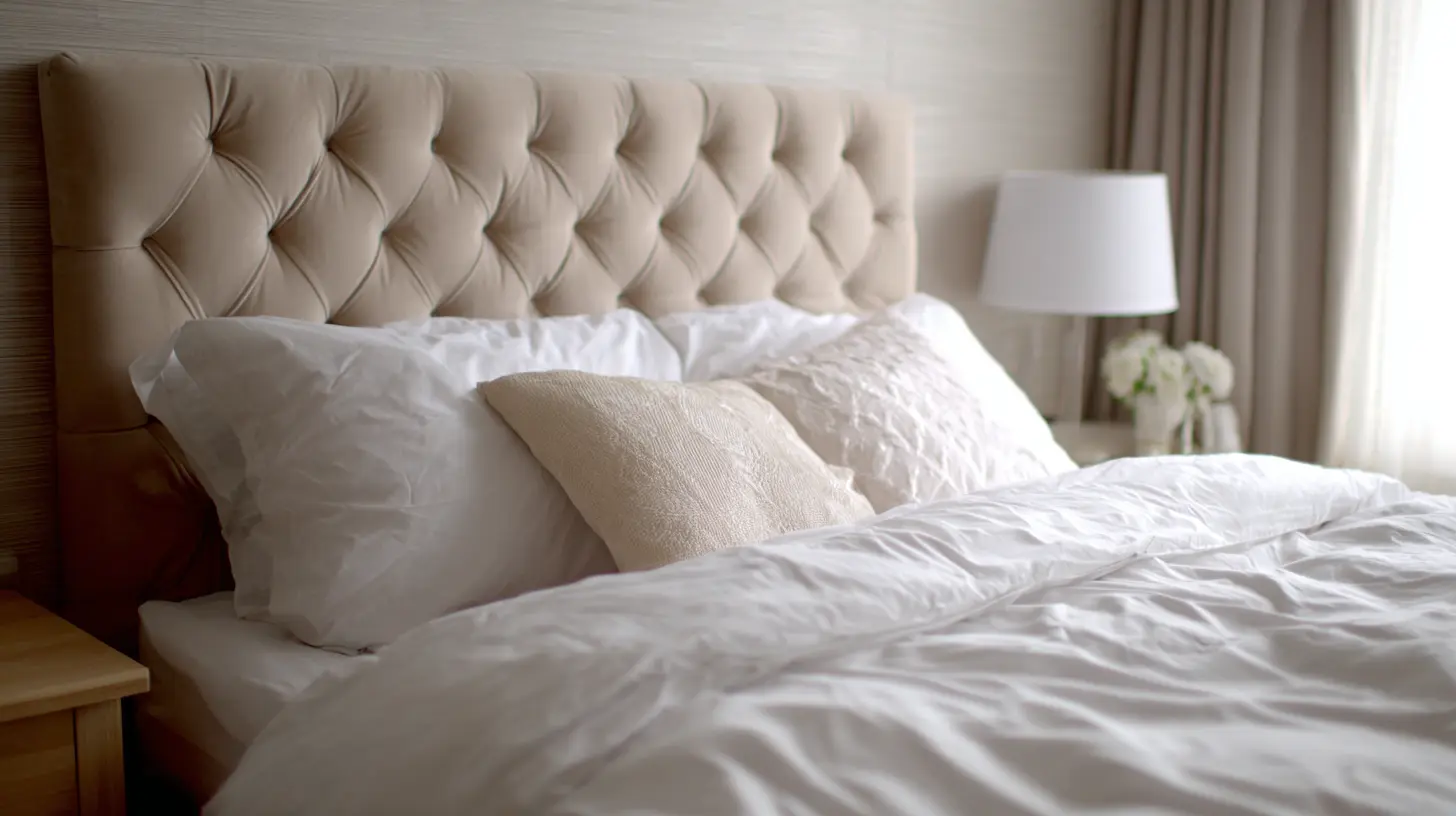
What Sleep Hygiene Actually Means
Sleep hygiene is a set of conditions and habits that make sleep more likely to arrive and stay. The term sounds clinical, but the concept is simple: give your body the signals it evolved to expect at night, and remove the signals that say "stay awake."Two principles sit underneath almost every sleep hygiene recommendation. The first is the circadian rhythm, your internal clock, which is most sensitive to light. The second is the sleep drive, the pressure to sleep that builds while you are awake, which is sensitive to timing and stimulation. Your bedroom influences both. Light exposure in the evening delays melatonin release and pushes your clock later. A warm room interferes with the natural drop in core body temperature that precedes sleep. Noise fragments sleep even when you do not fully wake. None of these factors alone ruins a night, but they stack.
The mistake most people make is treating the bedroom as a passive backdrop. It is not. It is an active input into your nervous system every night, and small changes compound over weeks.
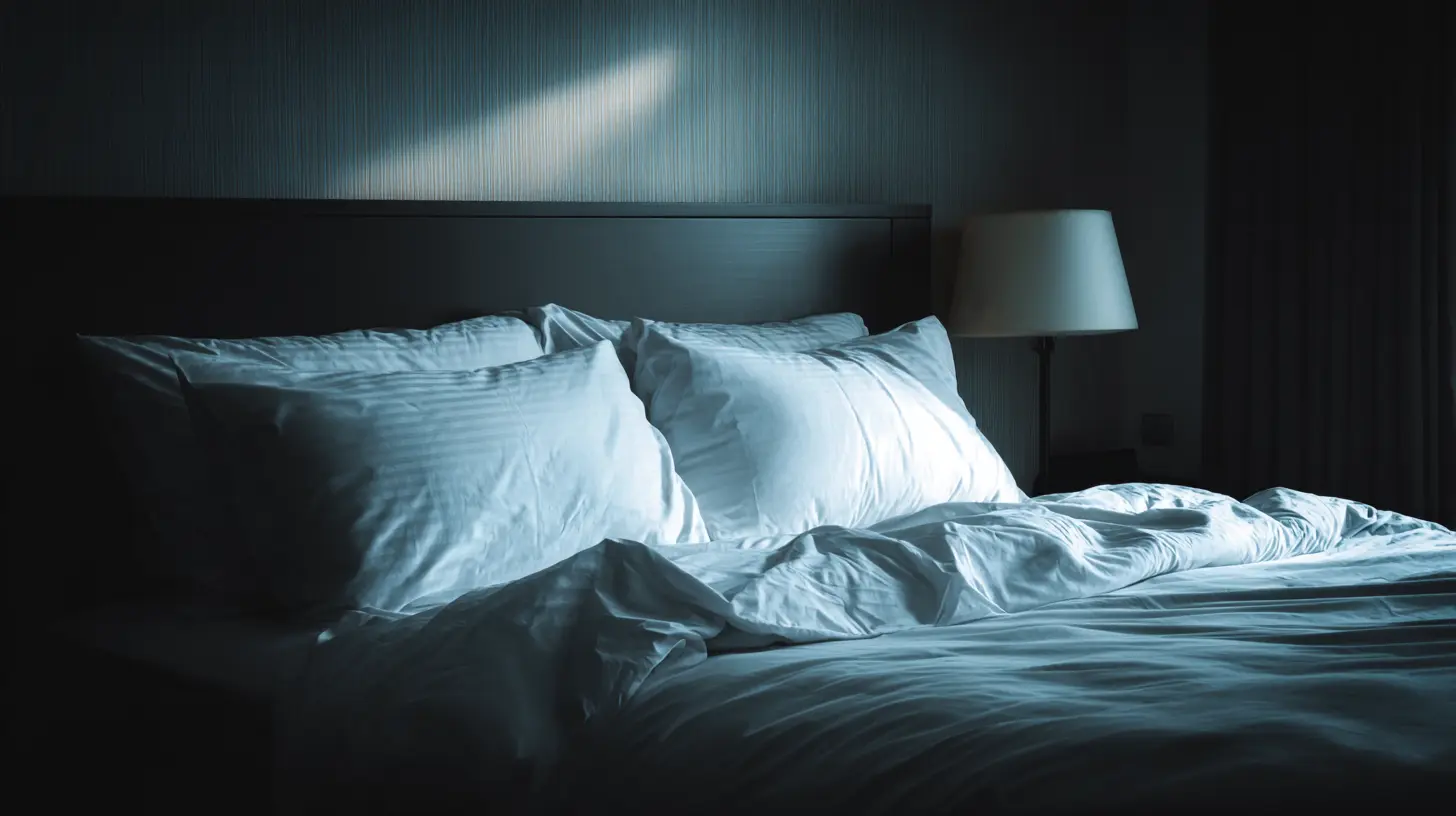
Start With Light, Because It Matters Most
If you change only one thing, change the light. Light is the most powerful external signal your body uses to decide whether it is time to be awake or asleep.The problem with most bedrooms
Walk into a typical bedroom at 10 p.m. and count the light sources. Overhead fixture, bedside lamp, phone screen, television standby light, a charging indicator, a streetlamp bleeding through thin curtains, a router blinking in the corner. Each one sends a small signal, and together they tell your brain that the day is still going.The blue-rich light from screens gets most of the attention, and it deserves scrutiny, but the bigger issue is total light exposure in the hour before bed and light exposure during the night. Even dim light during sleep has been associated with poorer sleep quality in observational research, though the strength of that link varies across studies. The practical takeaway is not to fear every photon. It is to make your bedroom meaningfully darker than the rest of your home at night.
Practical steps that actually work
Blackout curtains are the highest-leverage purchase for most people. Choose ones with a tight weave and a proper track or overlap at the edges, because light leaks around the sides defeat the purpose. If you rent and cannot install hardware, tension rods and magnetic curtain strips are workable alternatives. A sleep mask is a cheaper option and works well for travel, though some people find the pressure distracting. Try one before committing.Inside the room, replace cool-white bulbs with warm ones, ideally around 2700K or lower. This is not about avoiding all blue light, which is impossible and unnecessary. It is about reducing the intensity and color temperature of the light that hits your eyes in the final hour before bed. Dim the room rather than lighting it evenly. A single low lamp is better than an overhead fixture, because overhead light reaches your eyes from above and spreads across the whole room.
Cover or remove standby lights. A small piece of electrical tape over a router LED takes ten seconds and eliminates a surprising amount of nighttime glow. If you read in bed, use a dedicated reading lamp with a warm bulb and keep it low and angled away from your face.
One nuance: total darkness is not required for everyone. Some people sleep fine with a nightlight, especially if they need to navigate to a bathroom. The goal is to avoid bright, overhead, or screen-based light near bedtime and to keep overnight light dim and steady rather than flickering or moving.
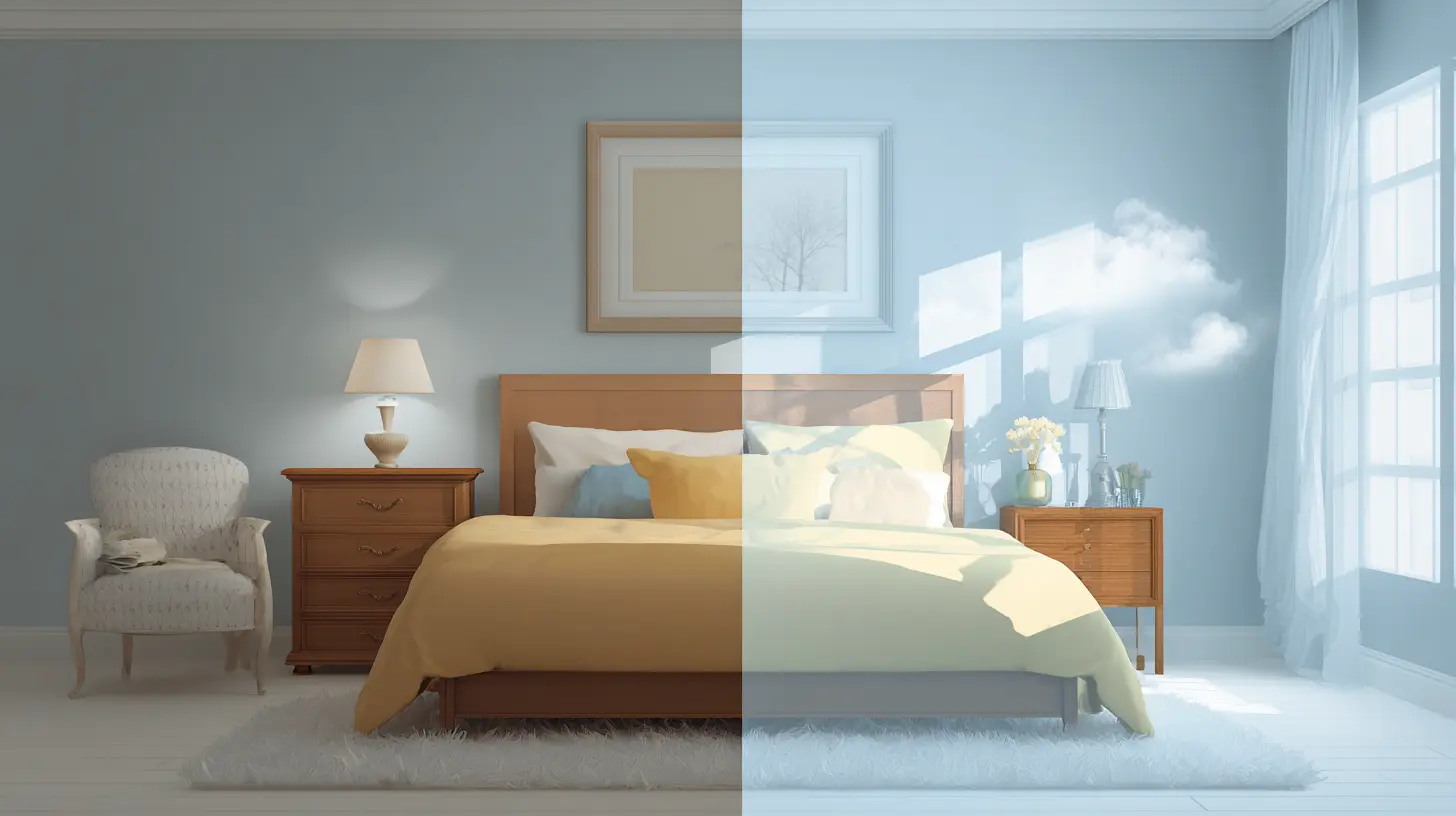
Temperature: The Overlooked Lever
Core body temperature follows a daily rhythm, dropping in the evening and reaching its lowest point in the early morning. Sleep onset tends to coincide with that decline. A bedroom that is too warm interferes with it.Most sleep guidance points to a range somewhere around 60 to 67 degrees Fahrenheit for the room, though the ideal varies by person, bedding, and clothing. The number matters less than the principle: cooler than daytime, and stable. A room that swings from warm to cold overnight is worse than a room that stays consistently cool.
Why cooling works and where people go wrong
Your body sheds heat through the skin, especially from the face, hands, and feet. If the room is too warm, that heat loss is slower, and you may feel restless or wake up sweaty. If the room is too cold, you curl up and shiver, which also disrupts sleep. The sweet spot is the temperature at which you can lie still under light bedding without feeling either.Common mistakes include piling on heavy blankets to compensate for a cold room, which traps heat and creates a microclimate that fluctuates. Breathable layers are better than one heavy duvet. Natural fibers like cotton and linen move moisture and heat more effectively than synthetic fills, though modern synthetics have improved and the difference is smaller than marketing suggests. What matters most is that your bedding lets heat escape rather than trapping it.
A fan can help in two ways: it moves air, which improves heat loss, and it creates steady white noise. Just point it at the wall or ceiling rather than directly at your body if direct airflow feels drafty.

Sound: Masking Beats Silence
Complete silence is rare in most homes, and chasing it can backfire. The goal is not a soundproof chamber. It is a stable sound environment where sudden noises are less likely to pull you out of sleep.The brain continues to process sound during sleep, and sudden changes in sound, like a door slam or a dog bark, are more disruptive than steady background noise. This is why a fan, a white noise machine, or a soft air purifier often helps more than earplugs. Steady sound raises the floor, so to speak, making abrupt noises less jarring.
Choosing between options
Earplugs are effective and cheap, but they can cause discomfort, trap moisture, and make it harder to hear an alarm or a child. They suit light sleepers in noisy environments, not everyone. White noise machines work well for many people but should be kept at a modest volume and placed away from the bed, not right next to your head. Some people find that pink or brown noise, which emphasize lower frequencies, feels less harsh than bright white noise. There is no strong evidence that one color is superior; choose what you find least noticeable.A trade-off worth naming: if you share a bed with a partner who snores or moves, separate sleep surfaces or separate rooms may improve both people's sleep more than any gadget. That is a bigger conversation, but it is a legitimate option, not a failure.
Air Quality and Ventilation
Air quality affects sleep in ways that are easy to overlook. Stuffy rooms, high carbon dioxide levels from poor ventilation, and airborne irritants can all contribute to restless nights, though the research is still developing and individual sensitivity varies widely.The simplest intervention is ventilation. Crack a window for a few minutes before bed, or leave it slightly open if weather and safety allow. If outdoor air quality is poor or noise is a problem, a small air purifier with a HEPA filter can help, and many run quietly enough for a bedroom. Keep filters clean; a dirty filter is worse than none.
Humidity matters too. Very dry air can irritate the nose and throat, and very humid air can feel oppressive and encourage mold. A range around 30 to 50 percent relative humidity is a reasonable target for most homes. A cheap hygrometer tells you where you stand, and a humidifier or dehumidifier can correct it if needed. Do not overdo either; more is not better.
The Bed Itself: Mattress, Pillow, and What Sits Under You
You spend roughly a third of your life in bed, and the surface you lie on shapes your comfort and alignment. But mattress shopping is full of hype, and the honest answer is that fit matters more than brand or price tier.Mattress considerations
A mattress should support your spine in a roughly neutral position and distribute pressure evenly. Back and stomach sleepers generally need firmer support; side sleepers usually need more cushioning at the shoulder and hip. Weight matters too: a heavier person sinks further into a soft mattress and may need firmer support to avoid sagging. There is no universal best mattress, and expensive does not automatically mean better for you.Pay attention to age and sagging. A mattress that has developed a visible dip or that you can feel sloping toward the middle is no longer doing its job, regardless of how much it cost. Most mattresses last somewhere around seven to ten years, though that varies with materials and use. If you wake with stiffness or find yourself migrating to the edge, that is a signal.
Pillows and alignment
Pillow height should match your sleep position. Side sleepers need a pillow thick enough to fill the gap between the head and the mattress so the neck stays neutral. Back sleepers generally need less height. Stomach sleepers need very little, and some benefit from a thin pillow or none at all, though stomach sleeping itself is often harder on the neck.A simple test: lie in your usual position and have someone look at your neck. If your chin is tucked toward your chest or your head is cranked upward, the pillow is wrong. Replace pillows when they lose loft or stop springing back.
The foundation and what lies beneath
A supportive bed frame matters more than people expect. A sagging box spring or a slatted base with wide gaps can undermine a good mattress. If you use a slatted frame, check that the slats are close enough and intact. Under-bed clutter does not directly affect sleep, but it affects air flow and, frankly, your sense of calm when you look at the room. A clear space under the bed is easier to keep dust-free.Create a Room That Signals Rest
Your brain builds associations. If your bedroom is where you work, argue, watch tense shows, and scroll through news, it becomes a place of alertness. If it is where you mainly sleep and relax, it becomes a place where sleep comes more easily. This is the logic behind the advice to use the bed only for sleep and intimacy, and it is sound, though it needs nuance.The work-from-bed problem
Many people now work from home, and the bedroom is often the quietest room. If you must work there, avoid working from the bed itself. Set up a desk or a small table, and put the laptop away when the workday ends. The goal is to keep the bed associated with rest, not deadlines. If space is tight, a folding tray table that gets put away each evening is a reasonable compromise.Clutter, visual calm, and stimulation
Clutter is not a moral failing, and a perfectly minimalist bedroom is not required. But visual noise keeps the mind slightly activated. A pile of unfolded laundry, a stack of unopened mail, and a tangle of cables all create low-grade mental friction. Spend fifteen minutes clearing surfaces and putting things away. You do not need matching furniture; you need a room that does not demand attention.Remove or cover the television if you can. If you watch in bed, at least keep it out of arm's reach and turn it off before you feel sleepy rather than after. The same goes for phones. A charging station across the room, or outside the bedroom entirely, breaks the habit of late-night scrolling and removes a light source. An old-fashioned alarm clock is a small purchase that solves the "phone as alarm" trap.
Scent and sensory cues
A consistent scent can become a cue for wind-down. Lavender is the most studied, though the evidence for sleep improvement is modest and mostly subjective. The bigger benefit is ritual: a familiar smell signals that the day is ending. Keep it subtle. Strong synthetic fragrances can irritate airways, especially in small rooms.
Build a Wind-Down Routine That Uses the Room
The room sets the stage, but behavior fills it. A wind-down routine works because it lowers arousal gradually rather than expecting you to go from full alertness to sleep in minutes.Timing and sequence
Start roughly 30 to 60 minutes before bed. Dim the lights, stop work, and switch to low-stimulation activity: reading paper books, light stretching, gentle conversation, a warm shower. The shower point is worth explaining. A warm shower does not make you sleepy because it warms you; it makes you sleepy because the subsequent cooling as you dry off accelerates heat loss, which nudges core temperature down. The effect is small but real for many people.Keep the routine consistent, but do not turn it into a rigid performance. If you miss a step, the ritual still works. The point is the general pattern, not perfection.
What to avoid in the final hour
Avoid heavy meals, intense exercise, alcohol, and caffeine close to bed. Caffeine has a long half-life, and for many people a late afternoon coffee still affects sleep at night. Alcohol may help you fall asleep faster but tends to fragment sleep in the second half of the night. None of this is about purity. It is about knowing which inputs tend to cost you sleep and deciding whether the trade is worth it.Common Mistakes and Misconceptions
A few beliefs about bedrooms and sleep are widespread and wrong enough to address directly.The first is that a harder mattress is always better for your back. Firmness helps some people and hurts others. Support and pressure relief matter more than hardness, and "orthopedic" is a marketing term, not a guarantee.
The second is that you should force yourself to stay in bed if you cannot sleep. If you are awake and frustrated for more than roughly 20 minutes, getting up and doing something calm in dim light, then returning when sleepy, is generally better than lying there. This is a core principle of cognitive behavioral therapy for insomnia, and it works because it prevents the bed from becoming a place of frustration.
The third is that white noise is universally helpful. It helps many people, but some find it distracting, and it can mask important sounds like alarms. Test it before relying on it.
The fourth is that a bedroom must be pitch black and silent to be sleep-friendly. Comfort matters more than extremes. A dim nightlight and a gentle fan are fine if they help you relax.
A Practical Makeover Plan
If you want to act on this without overhauling everything at once, work in layers.Start with light and temperature, because they have the largest effect and cost the least. Blackout curtains, warm bulbs, tape over LEDs, and a fan or a window cracked open will change more than most people expect.
Next, address sound and air. A white noise machine, earplugs for light sleepers, and a few minutes of ventilation each evening are cheap and reversible.
Then look at the bed. Check for sagging, replace worn pillows, and adjust bedding layers for breathability. This is where spending money makes sense, but only after the basics are in place.
Finally, change behavior. Move the phone out of reach, keep work off the bed, and build a short wind-down routine. These habits are free, and they are the ones most likely to stick because they do not depend on equipment.
Revisit the room seasonally. Winter calls for different bedding and humidity control than summer. A bedroom that works in January may need adjustment in July.
When to Look Beyond the Bedroom
A bedroom makeover can improve sleep substantially, but it cannot fix everything. If you have persistent insomnia, loud snoring with pauses in breathing, restless legs, or daytime sleepiness that interferes with life, those are reasons to talk to a clinician. Sleep apnea in particular is not solved by better curtains. Environmental changes support good sleep; they do not replace medical care when something is genuinely wrong.The honest framing is this: your bedroom is one of the few parts of your sleep life you fully control. You cannot control your job stress or your neighbor's dog, but you can control the light, the temperature, the noise floor, and the associations your room carries. Make those work for you, and sleep becomes less of a struggle and more of a default.
all images in this post were generated using AI tools
Category:
Sleep HygieneAuthor:

Madeline Howard